
Some of the links on this website are affiliate links, which means that I may earn a small commission at no additional cost to you if you click through and make a purchase. I only recommend products or services that I personally use and believe will add value to my readers. All opinions expressed here are my own. Thank you for supporting Easy Good Food!
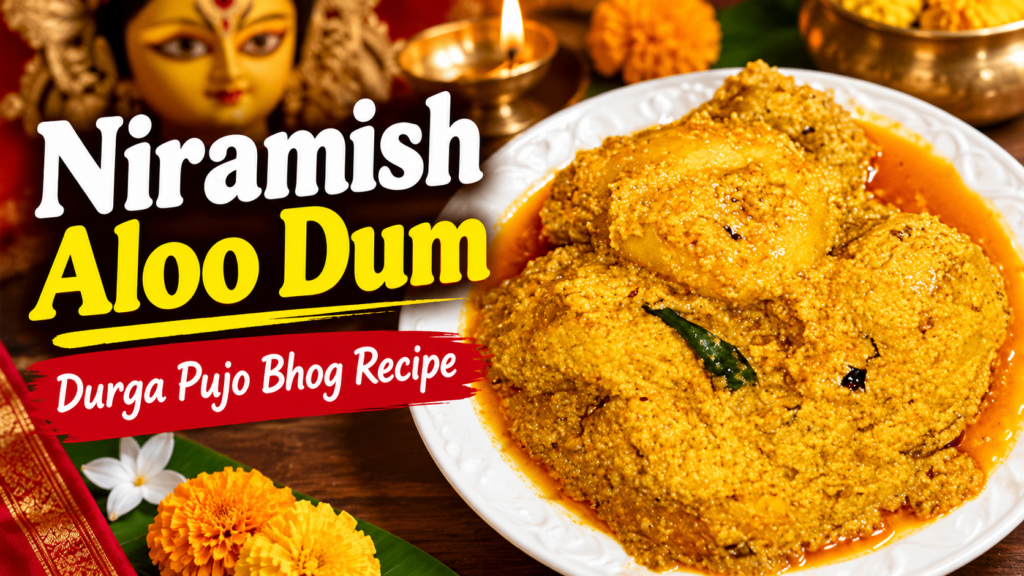
In every Bengali household, few dishes carry the unmistakable warmth and celebration of traditional bhoger aloo dum. Made strictly without onion or garlic, this rich, soulful potato curry relies on time-honored pantry staples—golden potatoes fried in pungent mustard oil and simmered in a velvety paste of fresh coconut, white sesame seeds, and cashews. Scented with a freshly ground homemade spice blend and finished with a sizzling tempering of pure ghee, ginger, and curry leaves, this unique niramish aloo dum recipe brings the authentic flavors of a sacred feast right to your dining table—whether you are preparing a special pure veg meal for an auspicious puja day, hosting a family celebration, or simply pairing it with hot, puffed luchis on a leisurely weekend morning.
Bengali Pujo Bhog-Style Aloo Dum Recipe
Before you head to the stove, make sure your whole spices are dry-roasted and freshly ground so their warm aroma shines through the creamy coconut-cashew gravy. Keep your ingredients prepped and within easy reach—once the mustard oil reaches smoking point, this traditional Bengali bhoger aloo dum comes together smoothly in one pan, finishing with that signature sizzle of ghee, ginger, and curry leaves right before serving.
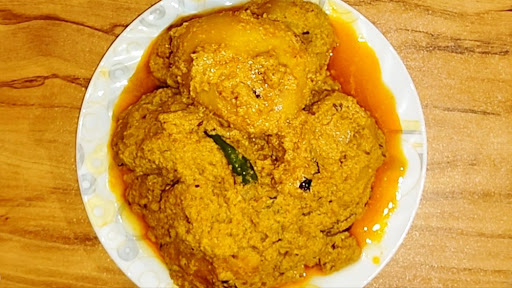

Bengali Niramish Bhoger Aloo Dum Recipe
Ingredients
Method
- Peel and cut the potatoes in halves. Wash well and drain out the dirt and extra starch.
- Deep fry all the potatoes in mustard oil at medium heat. Add 1 Tsp salt when frying the potatoes.
- Wash the cashews, sesame seeds, and soak for 30 minutes. Cut the coconut in small pieces.
- Prepare a thick, smooth paste with coconut, cashews, and white sesame seeds. Add water gradually as required.
- Dry roast all whole spices on low heat to get aromatic- a small piece of nutmeg, 1 mace, 1 tsp cumin seeds, 1 ½ tsp fennel seeds, 2 tsp coriander seeds, 4 cinnamon sticks (1 inch each), 2 cloves, 2 green cardamom pods.
- Spread the spice mix on a plate to allow the heat and moisture to escape. After cooling, the spices turn crispy and suitable for grinding.
- In the dry grinding jar, take the roasted and cooled spice mix. Pulse for 2 seconds at a time and wait. Repeat this for 3-4 pulses. This should give a fine powder mix. If bits remain, filter the spice powder through a sieve. Put the remaining spice bits in the grinding jar and give 2-3 pulses to get the desired texture.
- Heat ½ cup mustard oil (you may use the oil remaining in the pan after frying the potatoes).
- Add the spices for tempering – cumin seeds, bay leaf, and cinnamon sticks. Lower the heat and wait for the seeds to crackle. Do not burn the spices.
- Now add the wet curry paste and fry for 2 minutes. Add cumin powder, turmeric powder, and red chilli powder. Mix well and cook at a medium heat till the oil separates from the spice mix.
- Add water and mix well at high heat. Keep stirring the gravy so it does not stick to the base.
- When the water starts boiling, add the potatoes and mix again so the potatoes are fully covered with the gravy.
- When the gravy thickens, add 2-3 tsp of the homemade dry spice mix.
- In a tadka pan, heat ghee, add the chopped ginger, green chillies, and finely chopped curry leaves.
- Add the tempering spices to the potato curry and turn off the heat.
- Serve this dum aloo hot with bhoger khichuri.
Video
Notes
Key Ingredients & Notes from My Kitchen
- Potatoes: Use firm, medium-sized potatoes, peeled and cut into halves or large chunks. Frying the raw potatoes directly in hot mustard oil creates a delicate, golden outer crust that prevents them from turning mushy while keeping the centers soft and tender.
- The Coconut, Sesame & Cashew Paste: Freshly grated or diced coconut pairs with white sesame seeds and cashews to form the creamy base of the gravy. Blending them into a completely smooth paste ensures a silky texture without any grit.
- Mustard Oil: Essential for authentic Bengali flavor. Make sure to heat the mustard oil until it reaches its smoking point before lowering the flame and adding your potatoes or whole spices—this removes any raw pungency while keeping its signature depth.
- Freshly Roasted Whole Spice Mix: Dry-roasting nutmeg, mace, cumin, fennel, coriander, cinnamon, cloves, and green cardamom takes only two minutes on a low flame, yet it gives the curry its unmistakable festive fragrance.
- Ghee, Ginger & Curry Leaf Tempering: Added right at the very end, this quick chhonk brings warmth and freshness that balances the richness of the coconut and nuts.
Niramish Aloo Dum Recipe – Pairing & Serving Suggestions
No matter the pairing, always serve this niramish bhoger aloo dum piping hot. Here are the most celebrated combinations to try for the unique Bengali festival-style feast.
Luchi: Golden, balloon-puffed luchis that practically beg to be torn open and dipped straight into that velvety coconut-cashew gravy—the undisputed king of every Bengali festive morning.
Radhaballavi: Soft, spiced urad dal–stuffed flatbreads that turn a simple meal into an instant ashtami or puja-day feast without needing a single extra side dish.
Koraishutir Kochuri: Sweet, vibrant winter green pea kochuris that bring a pop of emerald color and subtle sweetness to balance the rich, warming spice blend of the aloo dum.
Basanti Pulao: Fragrant, saffron-hued sweet gobindobhog rice studded with cashews and raisins—together, this sweet-and-savory duo is pure bhog thali magic.
Steamed Gobindobhog Rice with Ghee: A mound of hot, aromatic short-grain rice topped with a generous drizzle of pure ghee, letting the nutty, ginger-scented aloo dum take center stage on a cozy niramish afternoon.
The Ultimate Bhog Pairing
Pair this rich, nutty aloo dom with a comforting plate of traditional bhoger khichuri – the yellow lentil and gobindobhog rice khichdi for a classic, wholesome satvik platter—whether you are preparing festive offerings or a soul-warming weekend lunch.
What Makes This Bhoger Aloo Dom Different from Regular No Onion No Garlic Aloo Dum?
Most niramish (no onion, no garlic) aloo dum recipes fall into two familiar camps: quick weekday versions made with a simple ginger-tomato gravy, or the standard cashew, poppy seed (posto), and melon seed (char magaz) paste.
This bhoger aloo dom takes a distinct, deeply satvik approach. Because bhog is prepared as a sacred offering, adding a thoughtful touch of pure, auspicious ingredients elevates a humble potato curry into something truly special—rich, aromatic, and memorable without relying on pungent alliums.
A Satvik Gravy Base Built on Sesame, Cashews, and Coconut
Instead of following the usual formula, this recipe builds its signature depth from a pure, temple-inspired trio of white sesame seeds, cashews, and coconut (shreefal):
- White Sesame Seeds (Sada Til): White sesame brings a warm, earthy nuttiness and subtle toasted depth that anchors the gravy when onion and garlic are absent. Ground into a smooth paste, it gives the curry natural body and helps the masala cling evenly to every potato.
- Coconut (Shreefal): Revered in sacred offerings as shreefal, coconut contributes gentle natural sweetness and a soft, rounded aroma. It mellows out sharp spice edges so the gravy feels calm and harmonious without needing heavy cream or excess sugar.
- Cashews: A modest touch of cashews adds a silky, cohesive mouthfeel, tying the earthy warmth of sesame and the delicate sweetness of coconut together into a lush, celebratory finish.
Fragrant Balance Over Fierce Heat
In satvik cooking, flavors are meant to nourish and uplift rather than overwhelm the palate. Whole spices bloom gently first, followed by fresh ginger and warm ground spices, allowing the pure, nutty gravy base and tender potatoes to shine clearly.
That deliberate combination of satvik ingredients gives this bhoger aloo dom a distinct, soulful taste profile—special enough for ceremonial bhog offerings yet simple and wholesome enough for any niramish meal throughout the year.
Choosing the Right Potatoes & Pre-Prep Basics for Bhoger Aloo Dum
Since potatoes are the centerpiece of bhoger aloo dom, choosing the right cut and preparing them properly determines whether the finished curry looks clean and celebratory or turns mushy in the pot.
1. Medium-to-Large Potatoes Work Better Than Baby Potatoes
While many home recipes reach for baby potatoes, traditional bhog kitchens deliberately avoid them. Baby potatoes cook too quickly and soften easily during vigorous stirring and simmering. These varieties are prone to breaking apart in a large pot when cooking in a large batches.
Instead, authentic bhoger aloo dom relies on firm, medium-to-large everyday potatoes (such as Jyoti or Chandramukhi) cut into thick, uniform halves or quarters. Larger, evenly cut chunks hold their structure under high heat, stand up to batch cooking, and deliver melt-in-the-mouth, tender center without losing their clean edges.
2. Uniform Sizing Matters
Cutting every potato into similar-sized pieces ensures even heat distribution from start to finish. Uniform chunks prevent smaller pieces from softening too fast while larger ones stay firm in the middle. This is the secret to smooth, distinct, and visually neat gravy for bhog serving.
3. Pre-Boiling Vs. Frying Raw Potatoes
Unlike quick weekday curries that start with boiled potatoes, authentic bhoger aloo dom is traditionally prepared in large batches meant to serve dozens—or even hundreds—of people. In community and temple kitchens, cooks peel raw potatoes, cut them into sturdy chunks, and deep fry them directly in mustard oil before simmering them in the gravy.
Skipping the pre-boil step serves two critical purposes:
- Prevents Breakage: Pre-boiled potatoes become fragile and easily crumble when stirred in large vessels or simmered in rich gravies. Starting with raw potato chunks keeps every piece firm, intact, and well-shaped throughout cooking.
- Builds a Sturdy Golden Crust: Frying raw potatoes directly in mustard oil creates a sealed, golden-brown outer layer that locks in their natural moisture, adds subtle pungent warmth, and lets each piece slowly soak up the sesame, cashew, and coconut gravy as it cooks through.
Planning a Fasting-Friendly Menu? While this bhoger aloo dum brings rich coconut-cashew indulgence to festive feasts, my Vrat Wale Dahi Aloo offers a light, cooling yogurt gravy made specifically for vrat and upvas days—complete with a step-by-step video guide.
Bring the Joy of a Bengali Bhog Feast to Your Kitchen
You do not need a grand pujo pandal or a special calendar date to savor the soulful magic of traditional niramish cooking. With everyday pantry staples, a freshly roasted spice blend, and that unmistakable final sizzle of ghee and curry leaves, this Bengali bhoger aloo dum turns any ordinary meal into a celebration worth gathering around. Fry up a batch of golden luchis, serve this rich potato curry piping hot, and let every spoonful remind you how comforting pure vegetarian Bengali food can be.
Enjoyed this post? Join our community of home cooks! Subscribe to our YouTube channel and follow our social media handles for daily Vrat-friendly tips, induction cooking hacks, and authentic Indian flavors delivered straight to your feed.