Opening your rice cooker to a gummy, sticky mess is frustrating. You wanted perfect fluffy rice, but you got a bland brick instead.
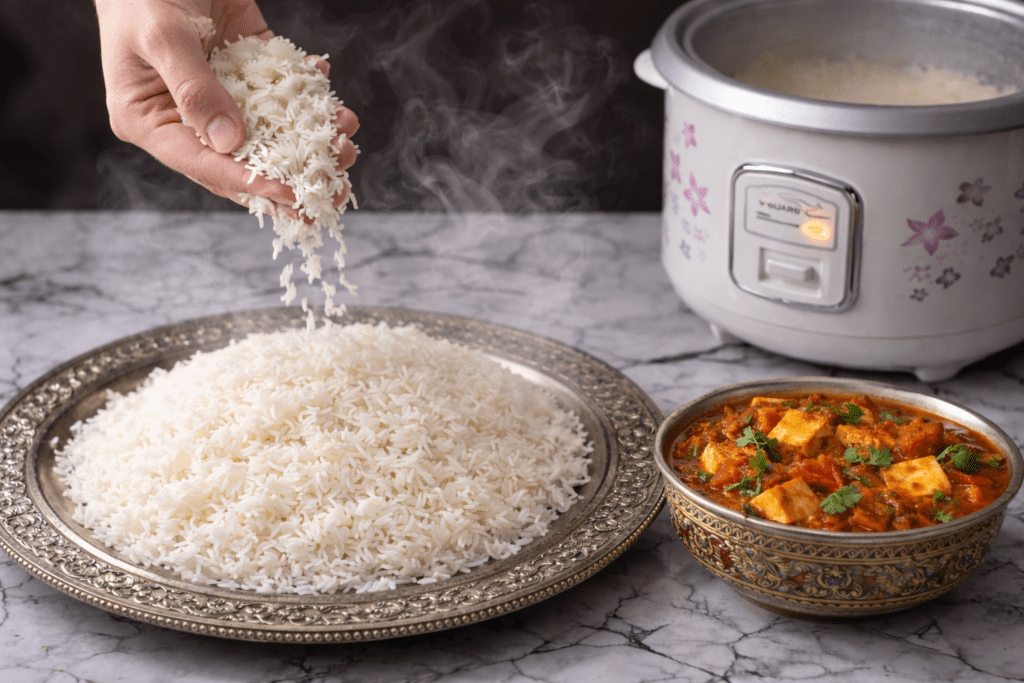
It doesn’t have to be this way.
While electric cookers are “set and forget,” the secret isn’t just the machine. It’s the technique. To get restaurant-quality results, you need to master the starch, the ratio, and the resting techniques.
In this guide, I’m breaking down the “fail-proof” method. No more mushy bottoms or dry tops. Just light, distinct grains every single time.
I’ve included step-by-step photos and a full video tutorial below. Let’s fix your rice once and for all.
The Step-by-Step Guide to Perfect Fluffy Rice
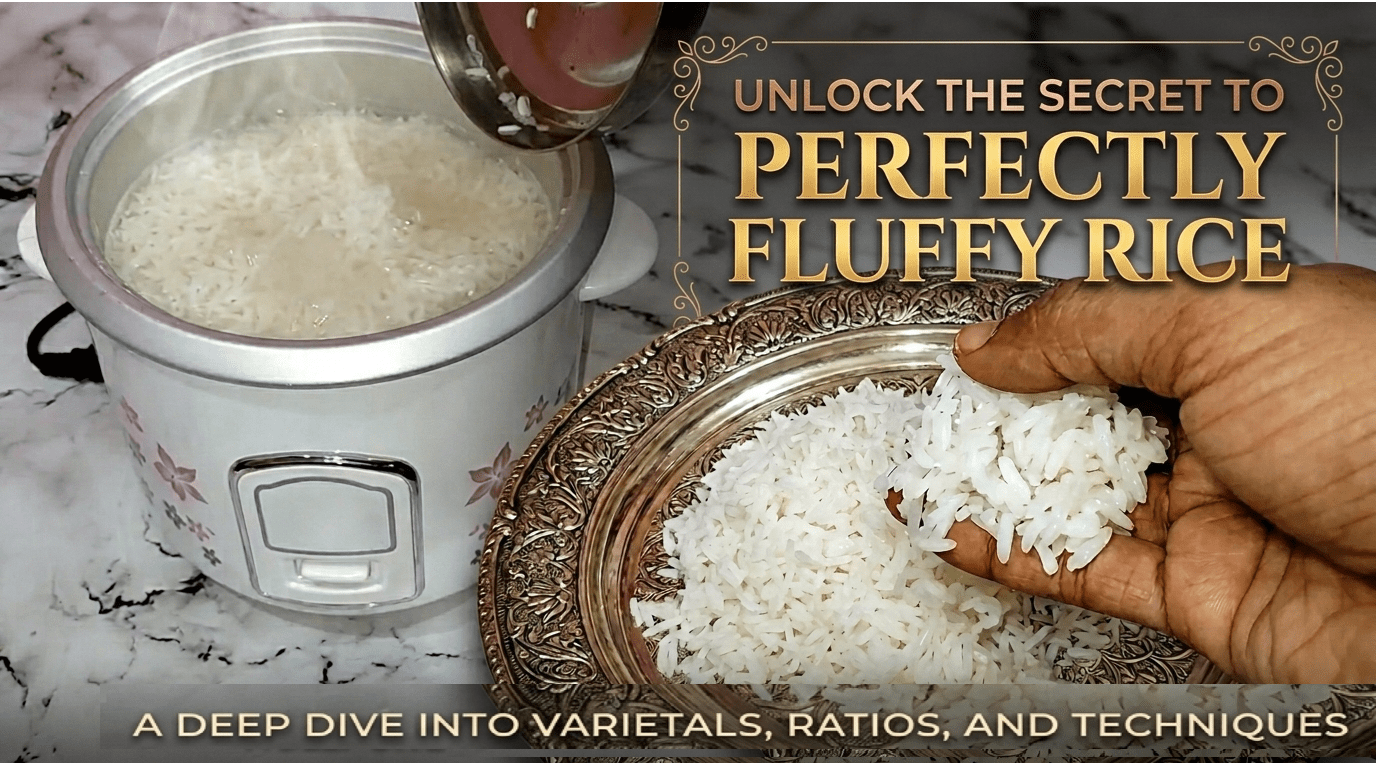

Perfect Fluffy Rice Recipe – Electric Cooker Edition
Ingredients
Equipment
Method
- Soak 3 Cups of Rice in about 5 Cups of water for an hour.
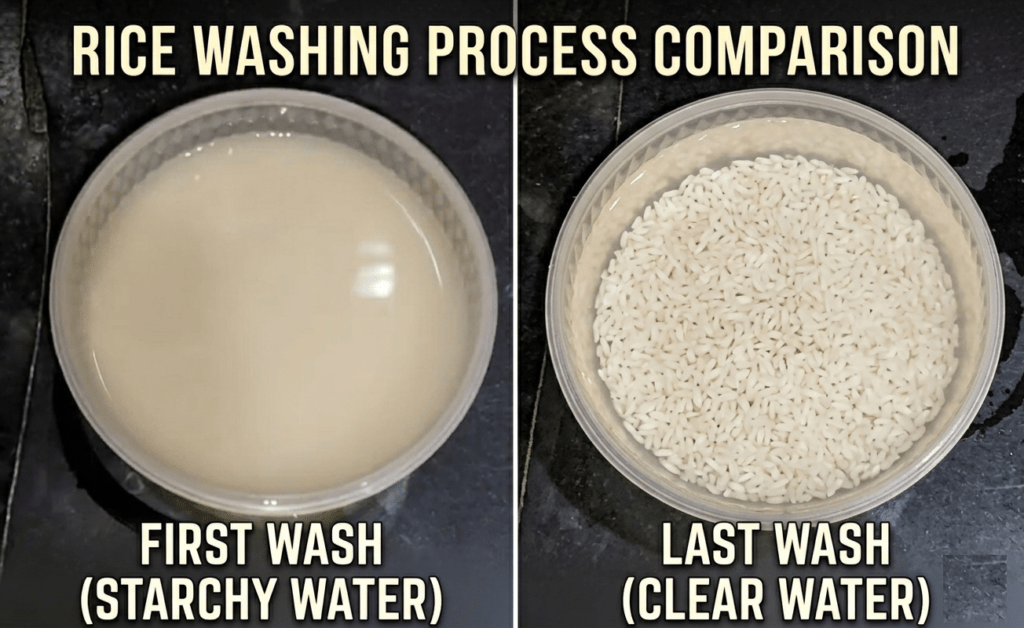
- After soaking for one hour, rinse the rice for at least 4-5 times. The last rinse should release clear water (as shown in the video).
- Place the perforated steaming plate at the base of the inner pot (see the video). Use the plate provided with your cooker in the package.
- Take 8 cups of water in the inner pot. Place the pot on the heating element and set the cooker to ‘Cook’ mode. Allow the water to boil.
- When the water is boiling, add the rice carefully with a spatula. Cover the lid and allow it to cook for some time.
- After some time the rice grains will spluttering out due to very high temperature. At this point, switch the cooker to ‘Warm’ mode for 5-10 minutes. Rice continues to cook and soften in the boiling water.
- When the water looks still, switch to ‘Cook’ mode again. The rice usually takes about 5-10 minutes more to cooking.
- When the water starts boiling again, check the grains. If they are soft to the core, it is time to switch off the cooker.
- Strain the excess water and serve the rice hot.
Video
Notes
Perfect Fluffy Rice – Serving Ideas
Warm rice is so delicious that you can eat it with a spoonful of ghee and mashed potatoes (seasoned with mustard oil, salt, and chillies). And if you are fond of fishes, a large piece of Maach bhaja (fish seasoned with turmeric powder and salt is fried in mustard oil).
Serve your rice with any veg or non-veg curry, dal, or gravy. You may also toss the rice with veggies, paneer, chicken, or prawns and serve with thick creamy gravy side dish.
Flavour Upgrade Options
There are several ways to enrich the delicacy of regular parboiled rice. While basmati, jasmine, and gobindobhog plain rice are aromatic, a few ingredients can render enticing retreat for the tastebuds without much effort. Here are a few effortless hacks:
- 1/2 spoon desi/cow ghee prevents the rice from sticking
- Cinnamon stick, cardamom, and bay leaf are superb flavour enhancers
- A few drops of lemon enhance the fluffy texture and impart pristine white shine to the rice grains
- Boil the rice in chicken/ vegetable stock or coconut milk with 75% water for a flavourful serving without extra effort.
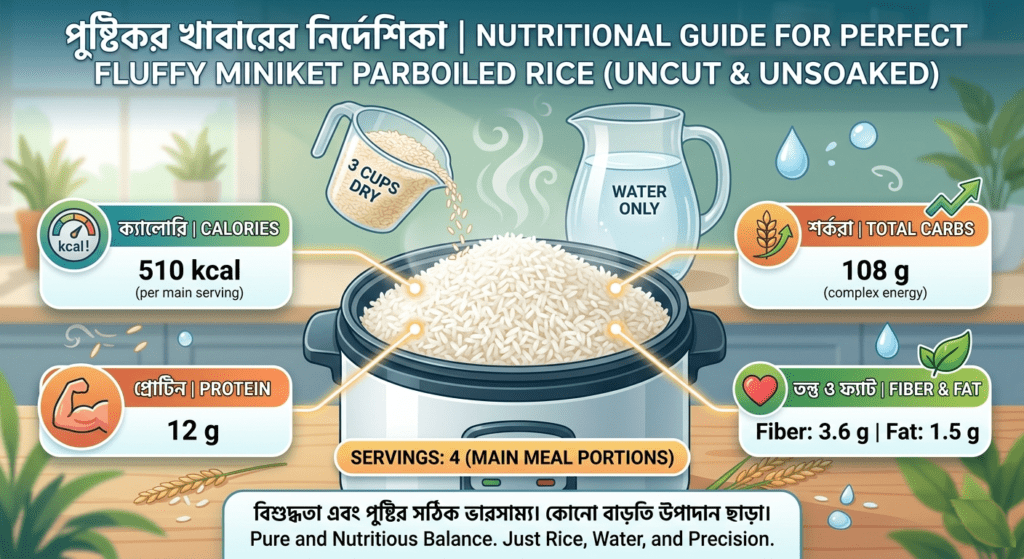
Perfect Fluffy Rice – Nutrition Chart
Why Did the Rice Fail – Problems and Fixes
Rice Feels Mushy
Incorrect and high water quantity in the rice can give a mushy texture. Wash the rice repeatedly to get the clear water consistency. This removes the excess starch and prevents the rice from breaking or prevent the gummy texture. See the rice washing comparison here:
My Rice is Crunchy
Adding less water than the recommended ratio can make the rice hard and crunchy. Increasing the cooking time is no use if there is no extra water to soften the grains. Add boiled water to the rice and heat again on the Cook mode to get the perfect rice cooker rice ratio.
Rice at the Bottom is Burnt
Cooking rice without the steaming plate leads to uneven temperature distribution. The bottom of the inner pot becomes extremely hot if not using the steaming plate. The rice may stick to the base or burn due to excessive heat and pressure.
Water Bubbles Out of the Vent
Failure to rinse the excess starch while washing produces dense foamy rice starch water during cooking. The boiling foam rises high to escape through the vents when covered with the lid. Prioritize washing the rice at least 4-6 times or unless the water turns clear.
Water to Rice Ratio – Comparison
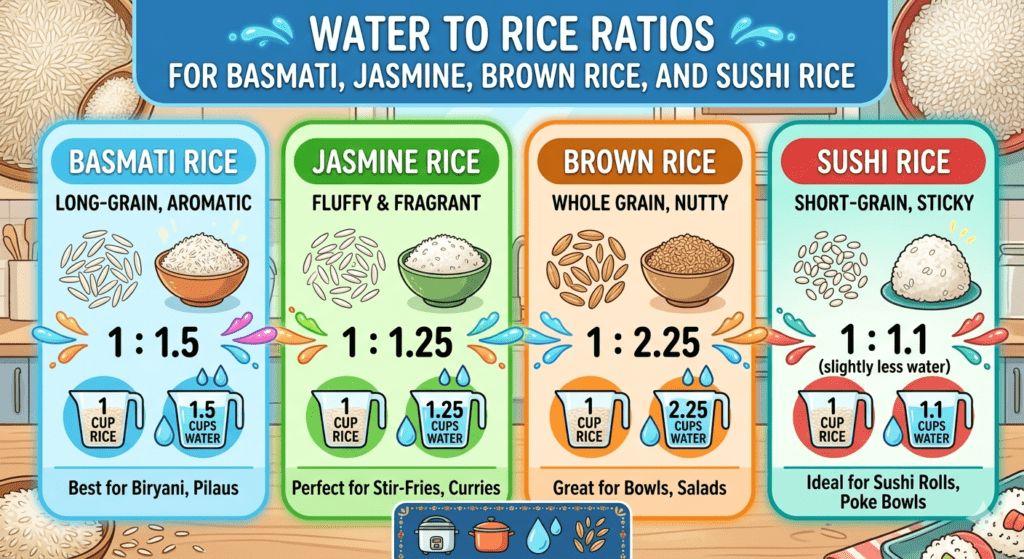
I always recommend using boiled water method and draining the extra starchy liquid post cooking for everyday parboiled rice. This cultivar is not aromatic so using the exact water ratio may leave a slightly unpleasant taste and odour. Similarly, brown rice requires more water to soften the dense fiber.
Rice cooking properties and methods change from one variant to another, choice of appliance, and other factors.
See the flavour upgrade options in this post for extra delicacy.
However, if you are using scented rice variants such as Gobindobhog, premium basmati, or others, refer to the measurement indicated in the comparison chart (above).
Electric Rice Cooker – Cleaning & Maintenance Guide
To keep your rice cooker performing like new and ensure your rice always tastes fresh, follow these simple maintenance steps.
1. The Inner Pot: Handle with Care
The inner pots are mostly available in aluminium and stainless steel material compositions. Some inner pots have a delicate non-stick coating. To prevent peeling:
- Cool before cleaning: Avoid “thermal shock” by letting the pot reach room temperature before adding water.
- Soak the pot in water: Always soak the pot in water for 30 minutes to allow the food residues to soften on the surfaces. This saves time and eases the cleaning process.
- Skip the scrubbers: Never use steel wool or metal pads. A soft sponge and mild soap are enough.
- The Power Soak: If rice is stuck or the pot has stubborn deposits, soak the pot in warm soapy water for 15 minutes. The grains will slide off without scrubbing.
2. The Steaming Plate & Lid
Starch often builds up in the small holes of the steaming plate and around the lid’s air vents. Some lids also have rubber ring gaskets for safe closure support.
- Clear the vents: Use a soft brush (like a clean toothbrush) to remove dried starch from the holes.
- Wipe the gasket: If your lid has a rubber ring, wipe it with a damp cloth after every use to prevent odors from lingering.
3. Protect the Heating Element
The most common cause of cooker failure is moisture or debris on the heating plate.
- Dry the base: Always wipe the outside surfaces of the inner pot completely dry before placing it back into the cooker.
- Check for food residue: Ensure no dry rice grains are sitting on the heating plate inside the main unit, as this causes uneven cooking. Residue on the heating plate can material damage and liberate unpleasant smell.
4. Natural Deodorizing Hack
Does your cooker still smell like the last curry you made?
Cooking food with onions, garlic, fish, and meat may leave the pot with a strong scent. Washing the pot with the detergent may not remove the odour entirely. Think your kadhai after cooking chicken tikka masala. Try this:
- Add 1 cup of water and 1 tbsp of lemon juice to the pot.
- Switch to “Cook” mode for 5 minutes.
- The steam will naturally deodorize the pot and the lid!
Rice Cooking – FAQs
How do you get fluffy rice in a rice cooker?
The secret to perfectly fluffy rice lies in three simple steps: Rinse, Ratio, and Rest.
1. Rinse the Rice
Always rinse your rice in a fine-mesh strainer or the cooking pot until the water runs clear. This removes excess surface starch – the main culprit behind gummy, sticky rice.
2. Use the Right Ratio
While many follow the “knuckle rule,” precision is key for fluffiness. Most long-grain white rice requires a 1:1.5 ratio (1 cup rice to 1.5 cups water), though your rice cooker’s included measuring cup is designed to work with the lines inside the pot.
Note: Always use the cup that came with your cooker, as it is usually smaller (approx. 180ml) than a standard US measuring cup.
3. Let it Rest
This is the most skipped step! Once the cooker clicks to “Warm,” do not open the lid. Let the rice steam at the Warm mode for 10–15 minutes. This allows the moisture to redistribute evenly through every grain.
4. Fluff with a Paddle
After resting, use a rice paddle or fork to gently “fold” the rice. Avoid over-mixing; only lift and separate the grains to let the remaining steam escape.
Why is my rice not fluffy in the rice cooker?
If your rice is consistently gummy, mushy, or crunchy, it’s likely due to one of the following reasons:1. Excess Starch (The “Gummy” Culprit)
If you don’t rinse your rice, the surface starch remains on the grains. During cooking, this starch gelatinizes and acts like glue, sticking the grains together instead of letting them stay separate and fluffy.
The Fix: Rinse until the water is clear, not milky.
2. Incorrect Water Ratio
Rice fluffiness is a delicate balance of hydration.
Too much water: The grains over-expand and burst, leading to a mushy, porridge-like texture.
Too little water: The core of the grain stays hard, resulting in a dry or “crunchy” texture.
The Fix: Double-check your rice type. For example, brown rice requires significantly more water than white rice.
3. Opening the Lid Too Soon
Peeking at the rice while it’s cooking or immediately after the timer goes off releases the residual steam needed to finish the cooking process. Without that final steam “soak,” the top layer of rice often stays tough while the bottom gets soggy.
The Fix: Keep the lid sealed for at least 10 minutes after the cycle ends.
4. Not Fluffing Promptly
If rice sits in the “Keep Warm” mode for too long without being fluffed, the bottom layers can become compressed and dense under the weight of the moisture.
The Fix: After the 10-minute rest, gently “toss” the rice with a plastic paddle to release trapped steam.
Nothing goes better with fluffy, steaming rice than a rich gravy. Check out my Easy Rice Cooker Egg Curry Recipe to make a complete, comforting meal using the exact same appliance!
Submit your review | |