
Some of the links on this website are affiliate links, which means that I may earn a small commission at no additional cost to you if you click through and make a purchase. I only recommend products or services that I personally use and believe will add value to my readers. All opinions expressed here are my own. Thank you for supporting Easy Good Food!
Think of your rice cooker as the “quiet achiever” of your kitchen. While many people think of it as a single-use appliance, mastering a few clever rice cooker hacks can actually transform this humble pot into a multi-utility appliance. For years, it has been tucked away in the corner, dutifully steaming white rice while you did the “real” cooking on the stove. But in 2026, the electric rice cooker is getting a massive promotion, evolving from a simple gadget into the most versatile tool for the modern, efficient kitchen.
From “one-pot” gourmet meals (rice kheer) and perfectly fluffy plain rice to momos to luscious curries, the electric rice cooker is actually a culinary Swiss Army knife in disguise. Whether you’re a busy professional trying to outsmart a packed schedule or a dorm-room chef, it’s time to stop treating your cooker like a single-purpose appliance.
Get ready to unlock the full potential of your countertop. Here are the ultimate rice cooker hacks to transform your meal prep from “basic side dish” to “effortless masterpiece.”
The Ultimate Rice Cooker Buyer’s Guide: What to Look for in 2026
Do you still think of your electric rice cooker as a tool just for boiling rice and millets?
In 2026, the landscape of kitchen technology has shifted. With the introduction of Smart AI sensors and Fuzzy Logic technology, modern rice cookers have evolved into versatile multicookers that handle tasks you never thought possible. From the rise of Low-Sugar (Desugar) technology—which helps reduce starch for a healthier diet—to specialized modes for everything from creamy dal to steamed dim sums, these appliances are designed to reclaim your time.
Beyond the sleek aesthetic, this minimalist kitchen appliance has become the ultimate solution for a no-gas, high-efficiency kitchen. As LPG and PNG costs continue to fluctuate, the precision of an electric cooker is a win for your pocket. Equipped with auto-sensor shut-off and high-thermal insulation, it offers a true “set-it-and-forget-it” experience. Whether you’re managing a busy work-from-home schedule or prepping a family feast, you can focus on your day and return to a dinner table filled with fresh, steaming-hot food exactly when you’re ready.
Oh! Did I mention that the rice cookers can perform at zero maintenance?
With the technological advancement, rice cookers are now available in various modules, sizes, and cutting-edge features. Here is a breakdown of what to look for when buying a rice cooker in 2026.
Understanding Instant Pot Capacity: Which Size is Right for You?
Determining the rice cooker size depends on the number of people for whom you are cooking meals in the pot. Buying a large pot for a single student only means you will end up wasting money on the appliance and electricity bills.
The best way to understand the rice cooker size for your needs is to check how many cups of rice or water the model can hold at a time.
Note: The standard rice cooker cups are 180 ml only.
Single Person (0.6-1l)
If you live alone in a hostel or a solo working professional away from home, these mini electric cookers are cute little wonders. From making masala chai in the evening to prepping a bowl full of soupy ramen.
The 0.6L to 1L models are the ‘Goldilocks’ size for small dorms or studio apartments. They heat up incredibly fast and are remarkably easy to clean.
Pro-Tip: This size is the ultimate vessel for instant noodles. The diameter fits a standard noodle block perfectly, and the auto-sensor ensures no messy boil-overs.
Stop settling for boring noodles! Check out my 11 Genius Instant Noodle Hacks—quick, flavor-packed meals with zero chopping and no ingredient overload.
Family Essentials (1.8L – 3L)
As per my experience, the 1.8l model is sufficient for a family of 3-4 adults. The 2.8l model holds the second spot in terms of popularity. It can cook food for 5-8 people at a time.
Batch Cooking (3L+)
Want to cook the favourite biryani for 10+ people at a time?
Look for 3-5l models if you are cooking frequently for a large batch of people. These sizes are not popular and the choices are quite limited. You need to choose from a few models from selective brands.
Heating Technology: Conventional vs. Induction Heating (IH)
The conventional, standard rice cookers use a conductive heating plate at the bottom. It allows heat distribution from the bottom of the pot only. The modern modules feature high-end Induction Heating (IH) technology. Here is an overview of what to expect from both of these heating systems:
- Conductive (Standard): These are budget-friendly and reliable. They heat the pot from the bottom.
- Induction (Premium): The modern configuration turn the entire inner pot into the heat source using magnetic fields. This allows uniform heat distribution for faster cooking while preventing the “crusty bottom” often found in cheaper models. For those prioritizing precision and energy efficiency, IH is the gold standard.
Inner Pot Materials: Durability and Health
The pot is the only part that touches your food, making its composition a vital factor for health and utility.
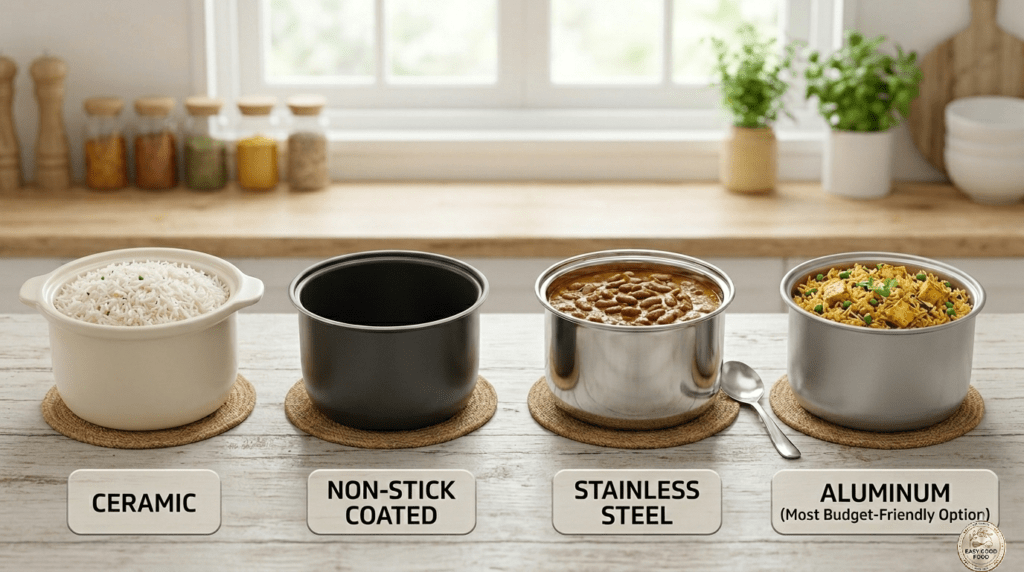
- Non-Stick Aluminum: The most common and easiest to clean. However, look for PFOA-free labels to ensure safety at high temperatures. It is cheaper than other inner pot materials.
- Ceramic: A great natural alternative to traditional non-stick. It’s scratch-resistant and excellent for high-heat “tarka” or sautéing. It is heavier than aluminum and settles fast unlike light aluminum pots.
- Non-Stick Coated: A few premium models have high-quality teflon coated inner pots. If you are tired of sticky food issues, these pots ensure comfort and ease of cooking.
- Stainless Steel: The most durable option. It doesn’t have a coating to peel off, but it requires a bit more technique (and a little oil) to prevent rice from sticking.
Program Presets: Beyond Just White Rice
A versatile cooker should offer more than one button. Look for models that include specific settings for:
- Quick Cook: Great for busy weeknights when you need rice in under 15 minutes.
- Brown Rice/Grains: These require a longer “soak and simmer” cycle that standard cookers often rush.
- Steam Function: Allows you to use a steaming basket for vegetables or fish while the rice cooks below.
- Slow Cook/Soup: Turns your rice cooker into a multi-utility crockpot for dals and stews.
Safety Features for High-Frequency Use
Since this is an electric appliance running daily, safety is non-negotiable. Ensure your chosen model has:
- Auto-Shutoff: Prevents the heating element from burning out if the pot is empty.
- Detachable Power Cord: This makes storage safer and prevents the cooker from being accidentally pulled off the counter.
- Steam Vent Design: Look for “cool-touch” vents that direct steam away from your hands and cabinets.
The Double Pot Advantage: Why Two is Better Than One
When choosing your model, check if the package includes two separate inner cooking pots. This feature allows you to cook multiple dishes back-to-back without waiting to wash up. You can prepare your main rice dish and immediately start a second batch of dal.
It is an essential convenience for busy families who need to get dinner ready quickly. Some top-tier models now offer this dual-pot setup to enhance your daily kitchen productivity.
10 Vital Rice Cooker Hacks for Desi Kitchens
From perfectly blooming spices to ensuring the dal is just the right consistency—time is always key the essence. The modern rice cookers are the best to when you need to tackle the meticulous demands of desi cooking.
This silent powerhouse is capable of far more than just steaming grains. By applying a few smart, science-backed tweaks, you can leverage this countertop masterpiece into a versatile multi-tasker to handle everything from delicious breakfast pastas to your afternoon masala chai base. Switch to this energy-efficient cooking appliance to reclaim your time without compromising on the health and authentic flavors of a home-cooked meal.
#1. The “One-Pot” Revolution: Your Cooker is the Secret to Perfect Pulao
Skip the heavy pressure cooker and let your rice cooker handle the delicate fluffing. Just toss in your spices and veggies for a stress-free, restaurant-style aromatic pulao.
From aromatic Basmati to fiber-rich brown rice, these cookers handle every grain with precision. You can even boil protein-packed rajma to perfection without monitoring a whistling pressure cooker.
Enjoy a fragrant, vegetable-loaded pulao while easily sticking to your healthy lifestyle goals. This “set it and forget it” method ensures fluffy results for every single meal.
Pro-Tip: Rajma is a tough legume and requires pre-soaking. Ensure soaking the kidney beans overnight.
#2. Desi Kitchen Shortcuts: From Buttery Dal to Steamed Dhoklas
The cutting-edge smart rice cooker features slow pressure-cook settings. This is perfect for boiling veggies, legumes, and meat to the desired soft texture.
Forget standing over a whistling pressure cooker and guessing the number of whistles. Your rice cooker provides a steady, gentle heat to cook incredibly creamy and buttery dals. Get the rich consistency you missed in the traditional high-intensity boiling.
Beyond lentils, this appliance is a secret weapon for light and healthy Indian snacks. You can easily steam fluffy, fermented dhoklas by placing a greased tin inside the cooker. The trapped steam ensures your snacks stay moist and airy without any dry edges. It is a true “set it and forget it” solution for your breakfast prep.
#3. Beyond Grains: Master Noodles and Pasta Without the Stovetop Mess
Ditch the boiling pots and cook your favorite masala pasta directly in the bowl. It is a total game-changer for those late-night cravings or quick study breaks.
#4. The Reheat Ritual: How to Restore “Fresh-Cooked” Texture to Leftovers
Use the ‘warm’ setting to reheat the leftover food in the fridge. It softens and heats the food to the accurate temperature without burning the base like a traditional gas stove.
#5. Kitchen Science: The Simple Trick to Stop Rice from Sticking Forever
Excessive starch in the grains can make your cooked rice sticky. First soak the rice with water at room temperature for at least 30 minutes. Wash the soaked grains repeatedly until the water runs clear.
Stop settling for mushy grains. If you loved these rice cooker hacks, you’ll want to see the science behind our Fool-Proof Method for Fluffy, Non-Sticky Rice.
#6. No-Wait Healthy Breakfast Solutions for Busy Days
Get your morning nutrition without standing over a hot stove while you are rushing. Your cooker can steam sprouts or prepare a veggie-loaded dalia without the stress of watching the entire process.
Once the dalia starts boiling, set the cooker to the Warm mode and it should be ready in minutes. The exact time taken depends on the quantity of food and vessel size.
#7. The Desi ‘Pot-in-Pot’ Secrets Revealed
Unlock ultimate productivity by cooking your rice and steaming vegetables at the same time. This clever stacking method saves energy and cuts your total kitchen time in half.
#8. Instant Milk Reduction for Your Desserts
Stop stirring milk for hours just to satisfy your late-night sweet tooth cravings. Simply crumble in some pedas to create a rich, creamy rabri base almost instantly. Unlike the gas stove, it does not burn the milk at the base when cooking at the Warm mode.
If using khoya, pedas, or condensed milk, the thick consistency should be ready quickly. To thicken the rabri faster and get more yield, add milk powder (diluted in warm milk) as per the required quantity.
#9. Prep Quick Sautéed Meals
Use the ‘cook’ mode to sauté your onion, garlic. and ginger paste in hot, aromatic ghee. Now toss in boiled veggies to make quick meals for busy days. It gives you that authentic stovetop flavor without ever needing to wash extra pans.
#10. Masala Chai: Lock the Aroma
Brew a large batch of ginger-infused tea base directly in your trusty rice cooker. The sealed lid locks in every bit of that cozy, spicy aroma.
Ensure you are using the simple traditional rice cooker for tea. Locking the lid of a modern instant pot with milk tea can be troublesome. Some models have a separate preset menu for tea and coffee to handle such culinary needs.
Is Food Cooked in a Rice Cooker Healthy?
Many people worry that electric cooking might “strip” the nutrients from their favorite traditional meals. Since the cooking time is often shorter and the lid remains sealed, the nutrients stay inside the pot instead of evaporating.
Research suggests that the controlled environment of a rice cooker actually helps preserve essential vitamins and minerals. According to experts at the Cleveland Clinic, this method of cooking is an excellent way to maintain a high nutritional value while fitting into a busy modern lifestyle. It is a win-win for anyone looking to eat healthy without spending hours in the kitchen.
Essential Rice Cooker Hacks – Maintenance & Troubleshooting
Keeping your appliance in top shape is the ultimate way to ensure consistent results. These maintenance-focused multicooker kitchen hacks will prevent technical glitches and extend your machine’s life.
Keep Your Rice Cooker Safe, Clean & Hygienic
Always wipe the base of the inner pot completely dry before starting a cycle. This simple habit protects the heating element from moisture damage and prevents expensive electrical shorts. If you notice a starchy buildup, a quick vinegar rinse can restore the shine.
Solving the “Warm Mode” Flip and Sensor Overheating
One of the most common complaints is the cooker prematurely flipping from “Cook” to “Warm,” leaving you with crunchy, undercooked rice. This usually isn’t a mechanical failure, but a sensor doing its job too well.
- The Weight & Magnet Logic: Most standard rice cookers use a magnetic thermostat. As long as there is water in the pot, the temperature stays at 100°C. Once the water is absorbed, the temperature rises rapidly. The magnet loses its pull at a specific heat threshold and “releases” the switch.
- The Overheating Glitch: If you are “dry cooking” (like sautéing onions or frying an egg) or cooking a very small amount of rice in a large 1.8L cooker, the base can overheat before the food is ready.
- The Fix: * Ensure Clean Contacts: Check the heating plate and the bottom of the inner pot for burnt rice grains or mineral buildup. Even a single grain can create an air gap, causing the sensor to misread the temperature.
- The “Liquid Ratio” Rule: If your cooker flips early, add two tablespoons of water and try again. The moisture acts as a coolant for the sensor.
- Check for Dents: A dented inner pot won’t sit flush against the heating element, leading to uneven heat and “ghost” sensor triggers.
Safe Steaming: Preventing Moisture Damage to Electronics
While the inside of the pot is designed for water, the exterior housing of your rice cooker is full of delicate circuitry. In 2026’s high-humidity environments, steam management is vital for the longevity of your appliance.
- Vent Clearance: Never place your rice cooker directly under wooden kitchen cabinets. The constant “wet steam” can warp the wood and, more importantly, condense back into the cooker’s control panel, causing short circuits.
- The “Dry External” Rule: Before placing the inner pot into the cooker, always wipe the outside of the pot completely dry. Water on the exterior can cause a “popping” sound and damage the heating coil over time.
- Steam Traps: If your lid has a detachable steam vent, clean it weekly. A clogged vent increases internal pressure, which can force steam into the internal electronics through the lid’s hinges.
Confused by the rumors? If you are still hesitant about making the switch because of worries about electricity bills or coating safety, read my complete breakdown of the 10 Electric Rice Cooker Myths vs. Facts to see why thousands of families are going 100% gasless this year.
Reclaim Your Time with these Rice Cooker Hacks in Your Smart Indian Kitchen
In the transition to an all-electric kitchen, the rice cooker is your most reliable workhorse. However, it is also the appliance that causes the most frustration when it doesn’t “behave.” In 2026, as we use these machines more frequently for everything from parboiled rice to one-pot curries, understanding their “brain”—the internal sensors—is key to consistent results.
The “Next Steps” Checklist
Step 1: Clean your cooker’s steam vent.
Step 2: Try a new grain like quinoa or millets.
Step 3: Browse our Rice Cooker Recipes for dinner inspiration tonight.
Do you have any smart electric rice cooker hacks?
Let us know, how you use this minimalist appliance in your kitchen in the comments.
Follow us on social media and check out simple recipes and kitchen tips on our official YouTube channel.
Enjoyed this post? Join our community of home cooks! Subscribe to our YouTube channel and follow our social media handles for daily Vrat-friendly tips, induction cooking hacks, and authentic Indian flavors delivered straight to your feed.
Submit your review | |