
Some of the links on this website are affiliate links, which means that I may earn a small commission at no additional cost to you if you click through and make a purchase. I only recommend products or services that I personally use and believe will add value to my readers. All opinions expressed here are my own. Thank you for supporting Easy Good Food!
The sacred Adhik Maas 2026 (also known as Purushottam Maas or Mal Maas) is a rare and beautiful structural pause in the traditional Hindu calendar. The essence of Adhik maas diet plan is rooted in the ancient principle of sattvik food—pure, nourishing meals prepared with mindfulness to support spiritual discipline during this sacred Hindu month. A well-balanced diet plan during this month emphasizes simple, wholesome ingredients.
Occurring only once every two and a half to three years, this highly auspicious period . Unlike regular months, which are filled with worldly milestones and grand celebrations, Adhik Maas is the time to look inward, slow down, and elevate our consciousness.
One of the most powerful ways to honor this holy month is through mindful eating. What we eat directly impacts our thoughts and energy levels during prayer, reading, and meditation.
Sattvic food consumed during this time is uniquely dedicated to spiritual alignment, deep devotion, and inner purification. To ensure only pure ingredients go into your food at this time, it is better to prepare the adhik maas diet plan for the entire month.
If you are wondering how to plan a clean, nourishing, and spiritually aligned menu for your household during this period, you are in the right place. This guide simplifies the traditional Adhik Maas diet, breaks down the essential fasting rules, and shares a curated collection of protein-dense, high-fiber, and delicious sattvik meals that will keep your energy steady all month long.
Food Rules: Adhik Maas What to Eat & Avoid
Navigating the traditional Purushottam Maas food rules doesn’t mean your daily meals have to be repetitive or lacking in flavor. The core philosophy of an Adhik Maas diet centers entirely around increasing Sattva Guna—the quality of purity, clarity, and inner peace. To maintain a truly serene mind and an energized body for your daily spiritual practices, the kitchen transitions away from heavy, stimulating ingredients toward clean, easily digestible elements.
Strict No-Onion, No-Garlic (Sattvik, Pure-Veg Food)
The foundational rule of cooking during this holy month is the strict exclusion of tamasic and rajasic ingredients, most notably non-veg (meat, fish, & eggs), onions and garlic. In sattvik culinary traditions, root ingredients like onion and garlic are believed to overstimulate the senses and cause mental restlessness, which can detract from meditation and chanting. Instead, flavor profiles are built beautifully using pure ghee, fresh ginger, cooling cumin, curry leaves, and mild, digestion-friendly spices like turmeric and coriander.
Embracing Wholesome, Clean Foods
While grand, celebratory dishes are paused, the daily menu focuses on nutrient-dense, whole foods that sustain the body naturally. An authentic Adhik Maas fasting food list embraces whole wheat grains, protein-rich lentils, seasonal vegetables, fresh fruits, and pure dairy or plant-based alternatives. The goal is to cook simple, balanced meals that provide long-lasting sustenance without causing the midday lethargy or heavy digestion often associated with processed or deep-fried foods.
💡 Quick Summary Checklist for Your Kitchen
To make your daily meal prep completely stress-free, here is a quick visual guide to mala maas sattvic food to keep on your counter:
| ✔️ What to Include (Sattvik & Nourishing) | ❌ What to Avoid (Tamasic & Stimulating) |
| Grains: Whole wheat, rice, quinoa, millets | Alliums: Onions, garlic, shallots, leeks |
| Proteins: Whole lentils, moong dal, clean pulses | Heavy Elements: Non-vegetarian food, alcohol |
| Produce: Fresh, seasonal green vegetables & fruits | Spices: Excessive red chili, heavy masking oils |
| Fats: Pure cow’s ghee, cold-pressed oils in moderation | Processed: Stale, packaged, or over-processed foods |
Purushottam Maas 2026 Diet – The Golden Rule
Wondering, what to drink during Jyeshtha fasts this year?
Here is a comprehensive guide to fluids you can consume with peace of mind during adhik maas 2026.
This year, observing the mala maas vrat and rituals during the lunar month of Jyeshtha can be overwhelming for health. Since the rare, spiritual pause coincides with the peak of the summer heat, your body loses moisture far more rapidly than during winter fasts. When you combine intense spiritual devotion and extended hours of prayer with long, stretchy fasts, dehydration becomes a major threat to your health.
The ultimate golden rule for a successful, high-energy Purushottam Maas 2026 diet is simple: Prioritize cooling, hydrating, and electrolyte-rich liquid bases.
Instead of waiting until sunset to gulp down plain water—which can overload an empty stomach—rehydrate systematically throughout the day with these traditional, sattvik, and intensely refreshing elixirs.
The Ultimate Hydration Guide for Fasting Devotees
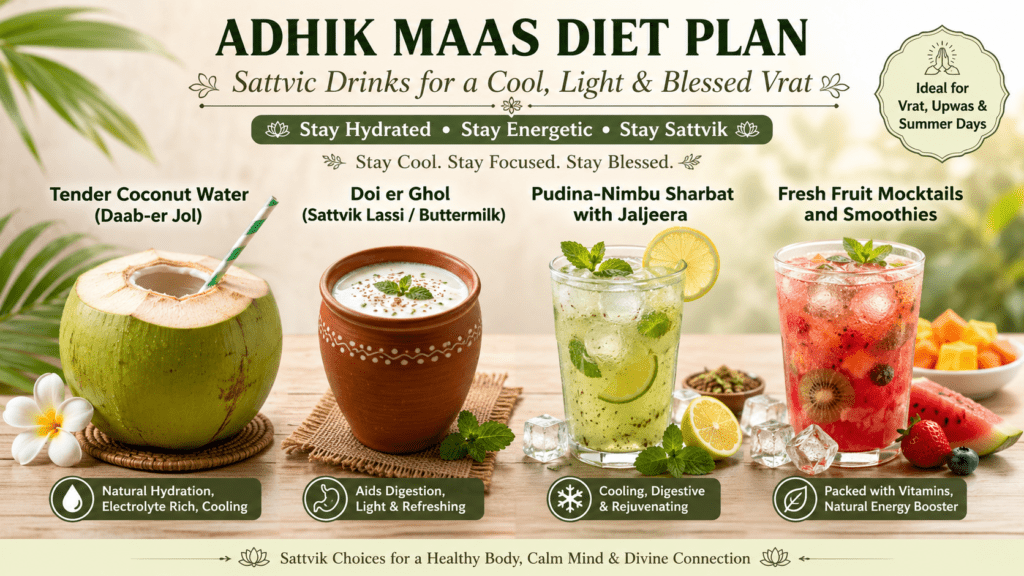
- Tender Coconut Water (Daab-er Jol): The ultimate natural electrolyte drink. Packed with potassium and completely raw and pure, a single glass of fresh coconut water instantly replenishes lost minerals and prevents fasting-induced headaches or dizziness.
- Doi er Ghol (Sattvik Chass / Buttermilk): A traditional, lightweight, whisked yogurt drink that keeps digestion incredibly smooth. Keep it strictly vrat-friendly by skipping table salt and flavoring it with rock salt (sendha namak), roasted cumin powder (bhuna jeera), and a tiny bit of grated ginger.
- Pudina-Nimbu Sharbat with Jaljeera: This is an absolute lifesaver for cooling down body heat. Blend fresh mint leaves with fresh lime juice, chilled water, and a dash of sendha namak and jaljeera. It cleanses the palate, keeps you alert, and beats the scorching summer afternoon slump.
- Fresh Fruit Mocktails and Smoothies: Blend hydrating seasonal fruits like watermelon, sweet lime (mosambi), or wood apple (bel). If you are keeping a fruit-and-milk fast, a simple banana or mango smoothie blended with chilled milk and a touch of honey offers sustained energy for your evening prayers.
💡 Fresh Additions to Boost Your Fasting Hydration
To add even more variety to your kitchen routine, try integrating these highly effective, cooling options that are easy to prepare on an induction cooktop:
- Mouri-Mishri Jol (Fennel & Rock Sugar Infusion): An age-old Ayurvedic remedy to combat internal body heat and acidity. Simply boil fennel seeds (mouri) in water on your induction cooktop, let it cool completely, strain it, and sweeten it with a tiny bit of rock sugar (mishri). Drink this water in small portion and balance the fluid intake with plenty of plain water and other Adhik maas sattvic drinks.
- Induction-Boiled Aam Panna (Raw Mango Cooler): Raw mangoes are abundant right now. Quick-boil raw mangoes in your electric cooker or induction pot, scrape the pulp, and blend it with fresh mint, roasted cumin, and black pepper. It provides absolute immunity against heat strokes.
- Chilled Sattu Sharbat (The Plant-Protein Hydrator): If you are observing a partial fast that allows roasted gram flour, whisk two tablespoons of chana sattu into cold water with lemon juice and rock salt. It acts as a drinkable meal, keeping you safely full and thoroughly hydrated for hours.
A Quick Reminder: Always ensure your drinks are prepared fresh. In a sattvik lifestyle, consuming freshly made juices and elixirs ensures you are absorbing the maximum amount of Prana (vital life force), helping you stay light, clear-headed, and perfectly focused on your daily sadhana.
Adhik Maas 2026 Lunch Ideas Using Modern Kitchen Tools
When observing the sacred rituals of Adhik Maas, managing time efficiently is key. Devotees often balance increased spiritual reading, daily chanting, and traditional prayers with their regular professional lives. Spending hours in a hot kitchen prepping complex meals can quickly become exhausting.
Fortunately, maintaining a strict sattvik diet doesn’t require a massive time investment. By leveraging the precision of an induction cooktop and the set-it-and-forget-it convenience of an electric rice cooker, you can prepare nourishing, high-fiber, and protein-rich lunches completely stress-free. Here are three effortless, single-pot lunch concepts that require zero onion or garlic, ensuring your kitchen remains a sanctuary of peace and purity.
1. The Ultimate Comfort Meal: Protein-Dense Moong Dal Khichdi
A classic comfort dish, Moong Dal Khichdi is an ideal midday meal during a fast. It offers a complete amino acid profile, making it a stellar source of plant-based protein that is incredibly easy on the digestive system.
- The Electric Rice Cooker Hack: Wash equal parts split yellow moong dal and fragrant small-grain rice. Toss them straight into the inner pot of your electric rice cooker along with fried finely chopped carrots, green peas, and fresh ginger. Add water, a pinch of turmeric, and salt.
- The Advantage: Simply hit the “Cook” switch and walk away to complete your afternoon prayers or chores. The cooker will automatically transition to the “Keep Warm” mode once the khichdi reaches a perfectly creamy consistency, preventing any burning or sticking.
2. Nutrient-Rich Vegetable Dalia (Broken Wheat Pilaf)
If you want a high-fiber alternative to rice that releases energy slowly throughout the afternoon, broken wheat (dalia) or millets are fantastic options.
- The Induction Cooktop Advantage: Using a deep pan on your induction cooktop, select the “Sauté” or medium-wattage setting (around 800W–1000W). Heat a teaspoon of pure cow’s ghee, pop some cumin seeds, and add fresh curry leaves and a pinch of asafoetida (hing). Toast the dalia until aromatic, toss in your favorite seasonal vegetables, add water, and lower the heat setting to a gentle simmer.
- The Advantage: Induction cooktops offer perfectly even heat distribution, ensuring your grains cook uniformly without needing constant stirring or monitoring.
3. Fluffy Jeera Rice with a Quick Sattvik Dal
For a traditional lunch that satisfies the entire family, a classic combination of fluffy cumin rice paired with a simple, tempered yellow lentil dish is unbeatable.
- The Dual-Appliance Workflow: Use your electric rice cooker to steam perfectly separated, fragrant Jeera Rice by adding a teaspoon of ghee and lightly bruised whole cumin seeds right into the water before turning it on. Simultaneously, use your induction cooktop to quickly whistle a pot of Toor Dal or Masoor Dal (if accepted in your family’s specific regional traditions). Temper the dal with a vibrant sizzling mixture of ghee, grated ginger, and green chilies.
⏱️ Appliance Comparison for Sattvik Meal Prep
| Feature | 🍚 Electric Rice Cooker | ⚡ Induction Cooktop |
| Best Used For | One-pot meals, porridge, and perfectly steamed grains. | Rapid boiling, precise simmering, sautéing, and quick tempering (tadka). |
| Safety & Cleanliness Benefit | Automatically switches to “Keep Warm” to prevent bottom-burning once the moisture is absorbed. | Offers instant temperature adjustments (lowering wattage) to stop pots from boiling over immediately. |
| Time Saved | High (Eliminates the need for constant stirring, though starchy meals still require a watchful eye during the boil). | Medium-High (Heats up instantly, cutting boiling times in half compared to traditional gas). |
Pro-Tip for Busy Afternoons: Always assemble your dry ingredients, wash your grains, and chop your vegetables in the morning right after your bath. Having your components neatly arranged makes executing these appliance-based recipes take less than 15 minutes of hands-on kitchen time before lunch.
Light & Comforting Evening Fasting Dinner Ideas
As evening approaches and the day’s spiritual practices wind down, the focus of an Adhik Maas diet shifts from high-energy fuel to deep digestive rest. After a dedicated day of fasting or mindful eating, loading the digestive system with heavy, fried foods right before sleep can disrupt both your rest and your early morning meditation routine.
An ideal Adhik Maas evening meal should be light, comforting, and designed to soothe the stomach. Whether you are keeping a partial fast (vrat) that permits only one grain-based meal at sunset, or you are looking for a clean, minimalist dinner to conclude a full day of sattvik eating, these gentle culinary ideas are perfect for a peaceful evening.
1. Wholesome Whole Wheat Paratha Wraps with Zesty Fresh Salad
For those who consume a grain-based meal after sunset, a clean, homemade whole wheat flatbread is an incredibly comforting choice.
- The Culinary Twist: Instead of heavy, deep-fried options or complex stuffed breads, roll out thin, light whole wheat parathas on a medium-heat induction setting, using just a minimal brush of pure ghee to keep them soft.
- The Refreshing Component: Pair the warm parathas with a vibrant, crunchy salad made of finely diced ripe tomatoes and cucumbers, tossed with a generous squeeze of fresh lime juice, a sprinkle of rock salt (sendha namak), and freshly cracked black pepper. Wrap the zesty salad directly inside the warm paratha for a light, clean, and highly satisfying dinner that takes under 20 minutes to assemble.
🥗 Looking for the Exact Recipe?
Skip the kitchen guesswork and view our full, step-by-step instructions for these light and crispy Sattvic High-Protein Wraps to make your evening meal prep simple and stress-free tonight!
2. Soothing Lauki and Moong Dal Soup
In Ayurvedic and sattvik traditions, bottle gourd (lauki or dudhi) is highly celebrated for its cooling, hydrating, and easily digestible properties. When paired with yellow split moong dal, it transforms into a highly nutritious, protein-rich evening soup.
- The Quick Preparation: Chop fresh lauki into small cubes and pressure cook it along with a handful of washed yellow moong dal, a touch of grated ginger, and turmeric. Once cooked, give it a quick blend until velvety smooth.
- The Finishing Touch: Lightly temper the soup on your induction cooktop with a tiny drop of ghee and a dash of roasted cumin powder. It is a warm, reassuring hug in a bowl that provides pure nourishment without any heaviness.
3. Roasted Makhana and Nuts (The Perfect Vrat-Friendly Evening Snack)
If your fasting rules involve skipping a heavy dinner altogether and opting for a light snack alongside a warm cup of herbal tea or milk, foxnuts (makhana) are an absolute lifesaver.
- The Nutrient-Dense Crunch: Makhanas are naturally high in protein, low in calories, and packed with essential minerals. Slowly dry-roast a bowl of crispy makhanas on your induction cooktop along with a few almonds and cashews. Season them simply with a pinch of rock salt and black pepper. They provide an instant, clean energy boost that curbs evening cravings perfectly.
🌙 Evening Meal Planning: Keeping it Gentle
To ensure your evening culinary choices support a restful sleep and a clear mind for the next day’s early morning prayers, keep these simple guidelines in mind:
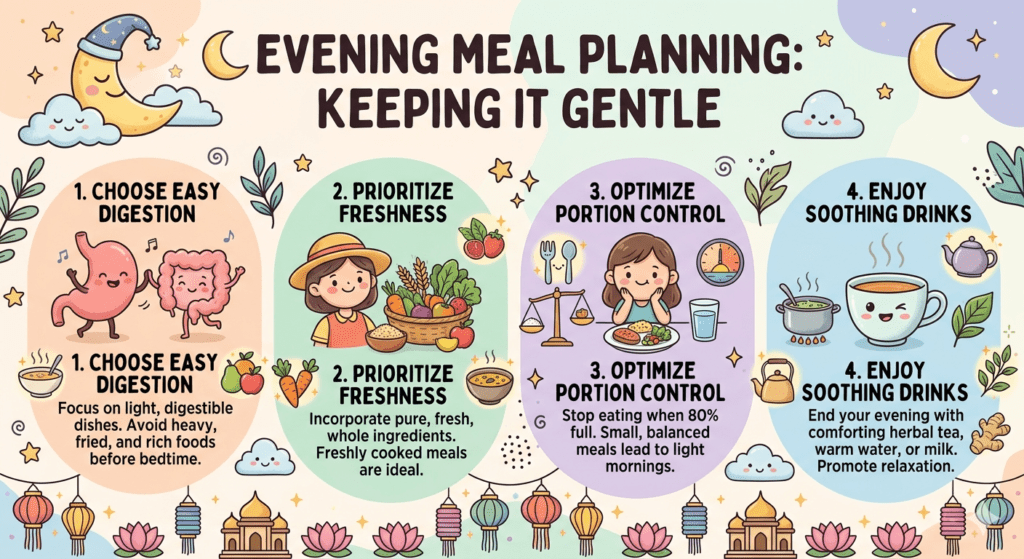
A Note on Mindful Eating: While prepping your adhik maas diet plan, it is vital to note that the traditional texts suggest that eating our final meal of the day before or right at sunset is highly beneficial during holy months. It allows the body to complete its digestive work efficiently, ensuring you wake up feeling remarkably light, refreshed, and clear-headed for your Brahma Muhurta (early morning) prayers.
Sacred Sweetness: Sattvik Desserts for Puja Offerings & Vitality
No spiritual fasting journal is truly complete without a touch of pure sweetness. In a sattvik lifestyle, desserts are not viewed as heavy, guilty indulgences. Instead, when prepared with pure ingredients like whole milk, nuts, cardamoms, and unrefined sugars, they are seen as instant sources of clean energy that soothe the nervous system and uplift the spirit after a long day of devotion.
More importantly, during Purushottam Maas, preparing these traditional sweets with utmost purity allows you to offer them as sacred bhog or prasad during your daily puja rituals before sharing them with your family.
Here is a curated selection of the finest sattvik desserts that are perfectly suited for your altar and deeply refreshing for your body:
The Best Sattvik Bhog & Dessert Selections
- Chilled Sabudana Kheer (The Ultimate Cooling Prasad): Tapioca pearls (sabudana) are highly regarded in Ayurveda for their instant energy-boosting and exceptional internal cooling properties, making them ideal for the summer heat of Jyeshtha. Simmered gently with full-cream milk, flavored with crushed cardamom, and topped with sliced almonds and pistachios, this creamy dessert is a beautiful offering for the deity.
- Makhana Kheer (The Protein-Dense Classic): Foxnuts (makhana) are completely pure, wild-harvested seeds, making them one of the most sacred ingredients for vrat bhog. Lightly roast the makhanas in a touch of pure cow ghee on your induction cooktop, crush them coarsely, and simmer them in milk until it reduces to a rich, rabdi-like consistency. It is packed with plant-based protein and is incredibly gentle on an empty stomach.
- Narkel Naru / Coconut Ladoo (Traditional Grated Coconut Bites): A timeless, shelf-stable offering that is incredibly popular for pujas. Made by cooking freshly grated coconut with organic jaggery (gur) or condensed milk on medium induction heat until it binds, these sweet rounds are spiced with cardamom and rolled by hand. They provide immediate healthy fats and can be stored easily in airtight spice or snack jars for days.
- Sattvik Apple Rabdi (Quick Fruit-Infused Dessert): For a lighter, fruit-forward dessert, reduce whole milk on your induction cooktop until it thickens to half its volume. Turn off the heat, let it cool slightly, and fold in finely grated fresh apples, saffron strands, and chopped nuts. The natural sweetness of the apple means you need minimal added sugar, keeping your night light and restful.
💡 Quick Puja Purity Tip
When preparing any of these desserts to offer as prasad during your morning or evening prayers, remember the traditional rule of sattvik cooking: never taste the food during the preparation process. Trust your measurements, keep your kitchen space serene, and let the first taste of the meal be received as a blessed offering!
⚠️ Kitchen Cleanliness Reminder: Because tapioca pearls are incredibly starchy, the milk can easily foam up and boil over through the steam vent if you are preparing this in an electric rice cooker. Keep a very close eye on the pot during the initial boiling phase, stir it frequently, and never leave it unattended until the pearls turn fully translucent and the kheer settles into a rich, safe simmer. For the best experience after a long fast, chill it in the refrigerator before serving.
The Science of Purity: Why Sattvik Food is Essential for Mind and Body
Choosing a pure, plant-based diet during Adhik Maas is far more than an ancient ritual—it is a deeply conscious lifestyle shift backed by timeless nutritional wisdom. In sattvik culinary philosophy, the food we consume does not just fuel our muscles; it directly shapes our subtle mental energies (Sattva, Rajas, and Tamas). Eating pure, clean meals during a period of intense spiritual devotion reduces inner restlessness, sharpens mental clarity, and provides the steady, lightweight physical energy needed for extended meditation, reading, and contemplation.
This ancient understanding aligns beautifully with modern holistic wellness studies. Academic research published on ResearchGate exploring the comprehensive influence and importance of Sattvik food highlights that a diet built around fresh, seasonal, and organic ingredients plays a major role in establishing overall physical vitality and psychological peace. The study underscores that by prioritizing foods packed with Prana (vital life-force energy)—such as whole wheat, fresh produce, and protein-dense lentils—we give our bodies the cleanest possible fuel, entirely avoiding the heavy, sluggish aftermath that follows over-processed or stimulating foods.
🌟 3 Pillars of a Sattvik Mindset in the Kitchen
To help you cultivate this high-vibrational energy while preparing your daily meals, focus on these three core practices:
- Cook with a Calm Mind: The energy and emotional state of the cook are believed to subtly transfer into the food. Try playing light bhajan tracks, chanting, or simply maintaining a peaceful, silent focus while prepping your lunch.
- Prioritize Vitality over Processing: Choose whole grains and fresh ingredients that are close to their natural state. The fewer preservatives and artificial steps between the farm and your plate, the richer the food is in natural vitality.
- Practice Conscious Portions: A key aspect of sattvik living is eating until you are comfortably satisfied, never heavy. Concluding your meals just as you feel lightly full keeps your digestion efficient and your mind completely alert for your evening prayers.
The Essence of Adhik Maas: Your Next Steps to a Soulful Month
Transitioning your kitchen into a sattvik sanctuary is the best way to comply with the Adhik Maas food rules. This is one of the most beautiful gifts you can give yourself and your family. By choosing clean, wholesome, and consciously prepared meals, you aren’t just nourishing your physical body—you are actively creating a peaceful internal environment that supports your daily prayers, reading, and meditation. Remember, sattvik cooking isn’t about restriction; it is an active celebration of pure, vibrant ingredients cooked with love, precision, and devotion.
Let’s Cook Together! Join Our Sattvik Community
You don’t have to navigate your culinary calendar alone this holy season. We have an entire library of step-by-step video tutorials, quick kitchen hacks, and daily inspiration ready to guide you through every single day of this sacred month.
- Watch the Recipes in Action: See exactly how these single-pot electric rice cooker meals and crispy whole wheat parathas come together! Head over to our YouTube Channel and subscribe for our exclusive Mala Maas Sattvic food ideas, featuring quick, high-fiber, and completely onion-and-garlic-free cooking guides.
- Get Daily Meal Inspiration: For beautiful step-by-step visual recipe cards, meal prep shortcuts, and organized grocery lists, follow our boards on Pinterest. Pin your favorite lunch and dinner ideas so you can easily access them straight from your kitchen counter.
- Join the Conversation: Connect with us on our professional updates and community pages, where we regularly share insights into traditional food heritage, culinary digital strategy, and the cultural science behind mindful Indian eating.
💬 Your Turn to Share: Which of these time-saving sattvik recipes are you going to try on your induction cooktop first? Do you have a favorite family recipe passed down for fasting seasons? Let us know in the comments section below! Wishing you and your loved ones a deeply blessed, peaceful, and spiritually enriching Purushottam Maas.
Enjoyed this post? Join our community of home cooks! Subscribe to our YouTube channel and follow our social media handles for daily Vrat-friendly tips, induction cooking hacks, and authentic Indian flavors delivered straight to your feed.