🍯Winter in West Bengal carries a sweetness that no other season can match. As the mornings turn misty and the air grows crisp, Nolen Gurer Sandesh recipe makes its much-awaited return in every home. These sweet delicacies with aromatic date palm jaggery and fresh homemade chhena define the soul of Bengal’s winter cuisine. This is the time when traditional sweets move from daily indulgence to sacred offerings, representing care and devotion.
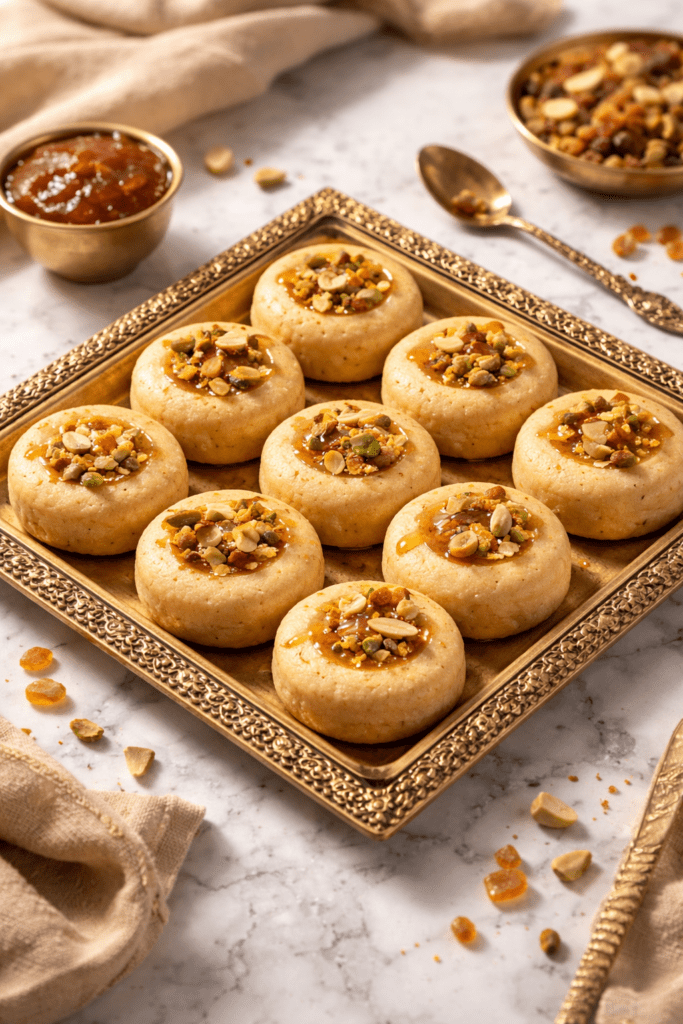
Nolen Gurer Sondesh holds a special place during Makar Sankranti and other winter festivals, when homemade mishti is offered to gods and goddesses as part of rituals and celebrations. Soft, delicately sweet, and naturally fragrant, these sondesh reflect the purity of seasonal ingredients and the belief that food made during winter carries both nourishment and blessings. From temple bhog to family puja platters, Nolen Gur sweets symbolise gratitude, prosperity, and the joy of welcoming a new harvest season.
This post explores the recipe with stepwise instructions, the cultural warmth behind Nolen Gurer Sondesh—why it is made only when winter arrives, how it becomes an offering of faith, and what makes this humble sweet a timeless expression of Bengal’s festive traditions.
Bengal’s Winter is Wrapped in Nolen Gur
In Bengal, winter is called pithe-puli r shomoy—a season when kitchens fill with warmth and the aroma of freshly made sweets. Nolen Gurer Sondesh belongs to this cherished time of year. It is made only when nolen gur—the fragrant date palm jaggery—arrives with the cold breeze of Sheet kal.
Collected at dawn from khejur gachh, this liquid gold is boiled gently to preserve its natural sweetness and smoky fragrance. Because nolen gur is seasonal and fleeting, sondesh made from it becomes special, awaited, and emotionally significant. This is not an everyday sweet—it is winter captured in a bite.
Why Nolen Gurer Sondesh Recipe Remains a Timeless Bengali Tradition
What keeps Nolen Gurer Sondesh alive across generations is its nishchhol shorolota—uncomplicated simplicity. It doesn’t rely on decoration or excess sweetness. Its strength lies in balance, patience, and tradition.
From matir thala in rural homes to festive platters in urban households, this sweet appears every winter as a shared memory. Thakuma’r haater sondesh, stories of childhood winters, and family gatherings all resurface with its aroma.
In a fast-changing food culture, Nolen Gurer Sondesh remains unchanged—a quiet symbol of Bengal’s winter, faith, and festive soul.
From Kitchen to Thakur Ghor: A Sweet Offering of Faith
In a Bengali home, the journey of Nolen Gurer Sondesh begins in the kitchen but finds its true purpose in the thakur ghor. Winter brings not only nolen gur but also a sense of devotion—bhakti mixed with everyday cooking. Prepared with patience and seasonal ingredients, this sondesh is more than a dessert. It becomes a quiet ritual, a way to connect the home, the season, and faith through food.
Nolen Gurer Sondesh as Bhog During Winter Pujas
During winter pujas like Makar Sankranti, Saraswati Puja, and household rituals, Nolen Gurer Sondesh is often prepared as bhog. Its soft texture, gentle sweetness, and natural aroma make it especially suitable for offering to the gods and goddesses.
Because nolen gur is available only in Sheet kal, the sweet carries a seasonal purity that aligns with festive worship. When placed on the thala, the sondesh represents gratitude—for the harvest, the cold season, and the fleeting gift of fresh khejur gur.
Shuddhota, Seasonal Food, and Devotional Cooking
In Bengali tradition, food offered to the divine must carry shuddhota—cleanliness, simplicity, and intention. Nolen Gurer Sondesh fulfills this naturally. Made from just fresh chhena and nolen gur, without preservatives or artificial flavours, it reflects mindful, seasonal cooking.
Simplicity lies at the heart of Bengali religious offerings. Sweets like Nolen Gurer Sondesh are chosen because they are unadorned, sattvik, and honest. There are no overpowering spices, no excessive richness—only balance.
Such sweets allow the natural ingredients to speak for themselves, symbolizing humility and gratitude. In this simplicity, Nolen Gurer Sondesh becomes timeless—perfect for worship, meaningful across generations, and deeply rooted in Bengal’s spiritual food culture.
Nolen Gurer Sandesh Recipe
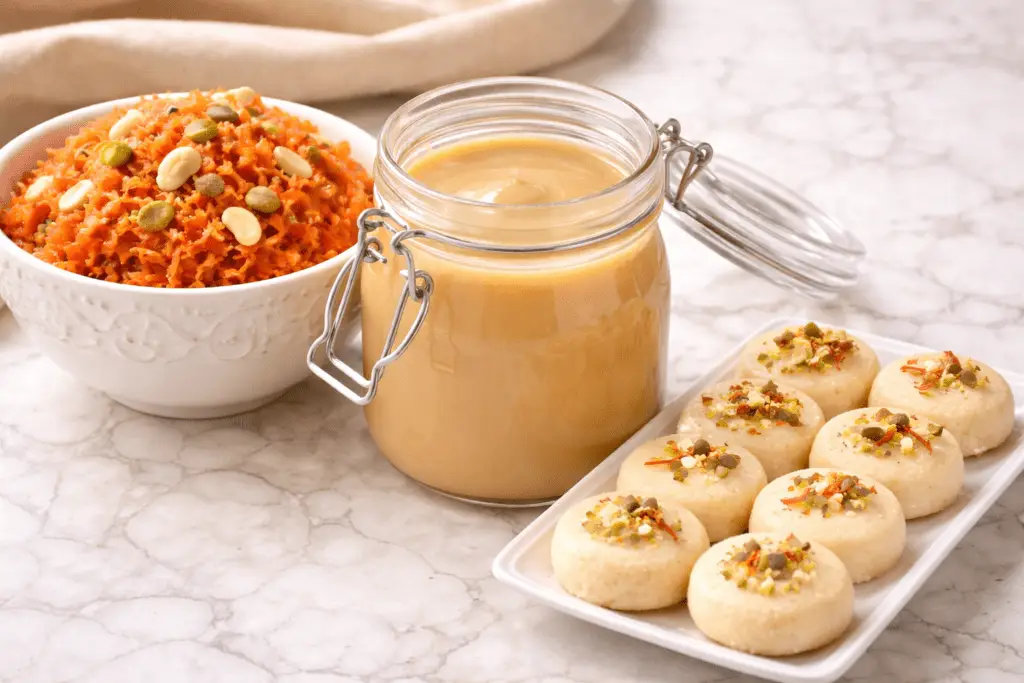
Making Nolen Gurer Sondesh is a labor of love that celebrates the arrival of winter in Bengal. The star ingredient, Nolen Gur (date palm jaggery), provides a smoky, caramel-like sweetness that pair perfectly with fresh homemade Chenna (cottage cheese).
Here is a step-by-step guide to making this authentic delicacy at home.
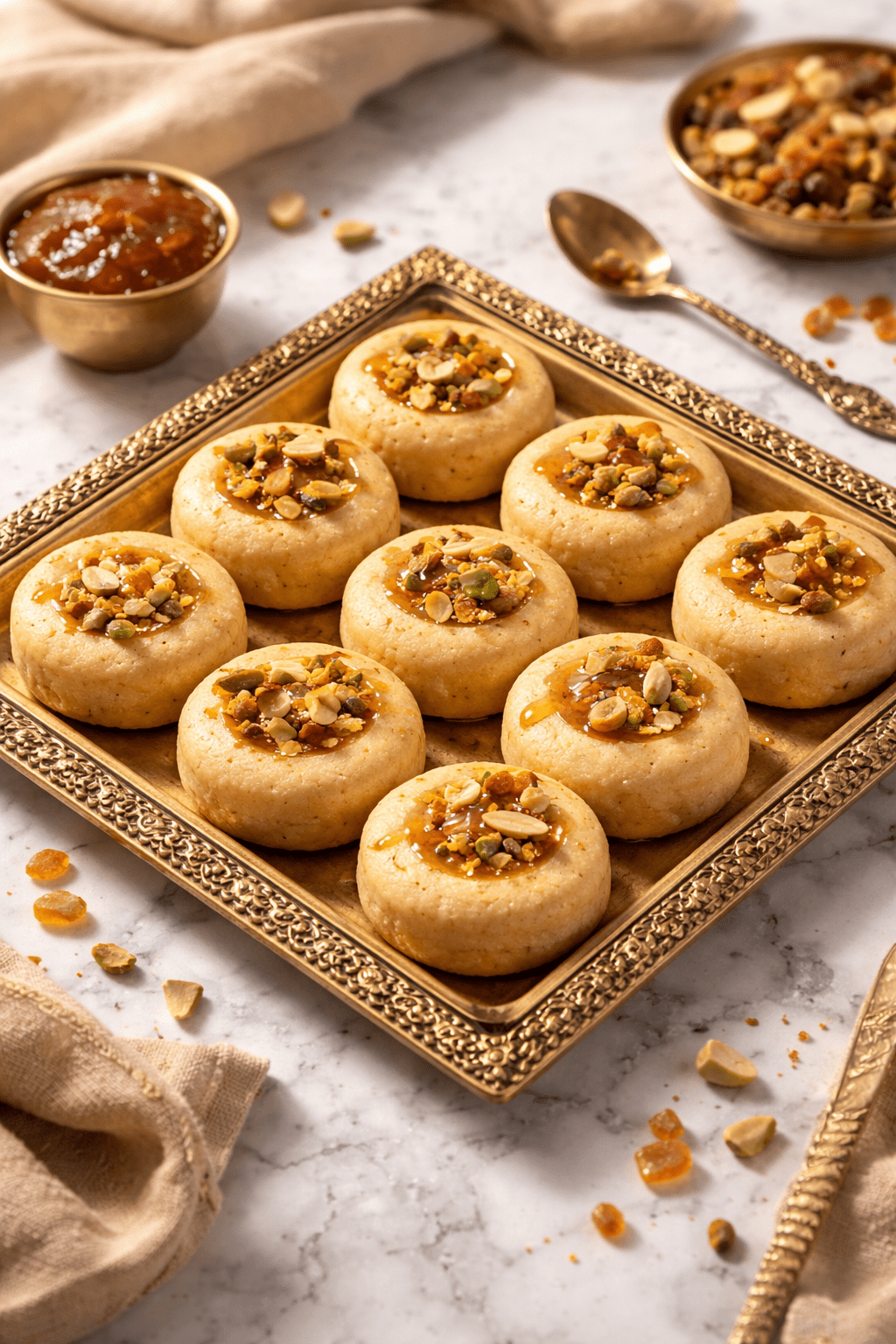

Nolen Gurer Sondesh Recipe
Ingredients
Equipment
Method
- Boil the milk in a heavy-bottomed pan. Once it reaches a rolling boil, turn off the heat.
- Slowly add the lemon juice while stirring gently. Stir the milk for sometime for the curdling. You are done when the greenish whey separates from the fresh chenna.
- Rinse the chenna under cold running water to remove the lemony scent. Place a cheesecloth over a big metal sieve. Pour the chenna from the pan to separate the water..
- Squeeze out the excess water and hang the cloth for about 30–45 minutes. Ensure the chenna is moist but it should not have a dripping texture.
- Knead the chenna with the palm on a flat plate. Use the heel of your palm to smoothen the chenna for 5–7 minutes. It becomes smooth, creamy, without any grainy texture.
- Add the Nolen Gur to the chenna and knead for another 2–3 minutes until the jaggery is fully incorporated and the mixture is uniform.
- Transfer the mixture to a non-stick pan over very low heat.
- Cook for 5–8 minutes, stirring continuously. The mixture is ready when it starts to leave the sides of the pan and feels slightly sticky.
- Remove the mixture from the heat and let it cool for just a minute (it should still be warm).
- Grease your hands or traditional wooden/stone moulds with ghee.
- Take small portions and press them into the moulds, or simply roll them into smooth balls and flatten them slightly.
- Garnish with pistachios. Let them cool completely to firm up.
Notes
Nolen Gurer Sandesh Recipe – Nutrition Information
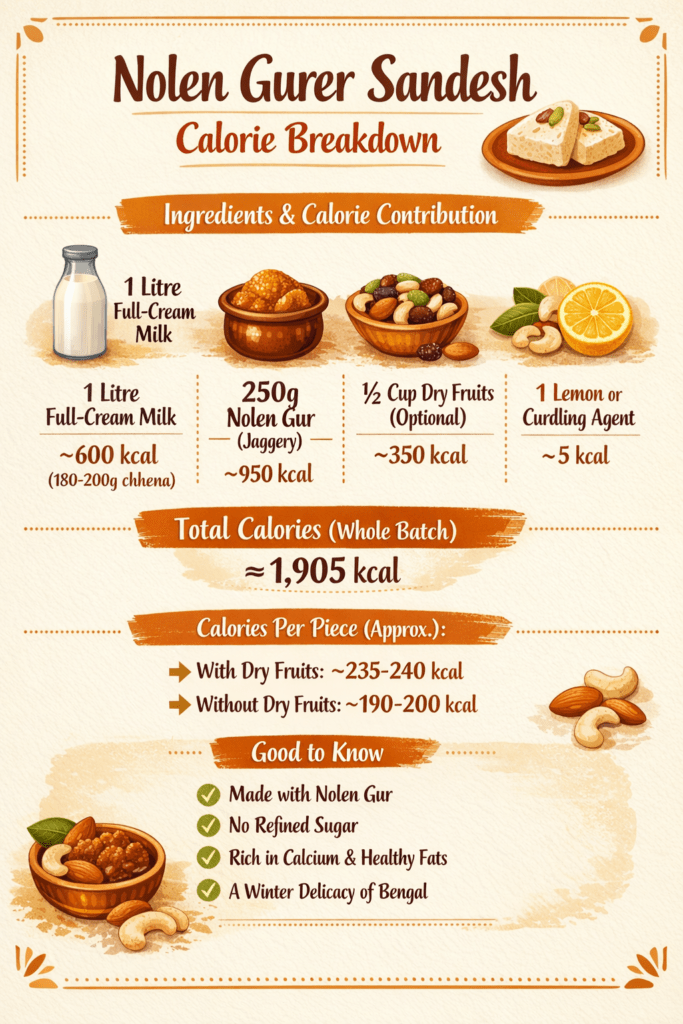
Nutrition component is the key concern for people with healthy food choices. This sondesh recipe does not have any unhealthy or high-calorie ingredients such as refined sugar. Nolen gur is much more than its earthy notes of caramelised sweetness. Date palm jaggery is rich source of antioxidants, vitamins, and minerals. When prepared with nuts, these sondesh contribute considerable fiber to the daily diet.
Here is elaborate breakdown of Nolen Gurer Sandesh calories presented in the infographic chart below:
💡 Nolen Gurer Sandesh Recipe – Pro Tips for Success
Use Homemade Chhena: Always make nolen gurer sondesh wih homemade chhena. Packaged cottage cheese is too hard and does not provide the required consistency. Your sondesh may become too dry and tasteless.
Don’t over-drain: If the chenna becomes too dry, your sondesh will crack. It should feel like soft playdough.
The Heat: Always keep the flame at its lowest setting during the “Pak” process to preserve the delicate aroma of the jaggery.
Storage: Since these sweets contain fresh homemade cheese and no preservatives, consume them within 2–3 days and keep them refrigerated.
Nolen Gurer Sandesh FAQs
What is the meaning of Nolen Gurer?
The meaning of nolen Gurer is all forms of sweets and desserts made of date palm jaggery from West Bengal.
Nolen gur is a Bengali word derived from ‘’notun gur’ or new season jaggery. Every year farmers in Bengal collect large volumes of date palm sap and process nolen gur in solid chunks and liquid jhola gur.
What is the difference between Nolen Gur and Gur?
Nolen gur is the authentic date palm jaggery. This flavourful Gur is prepared by boiling the sap collected from date palm trees during winter in West Bengal.
There are two forms of nolen Gur – patari (solid chunks) and jhola gur (luscious liquid jaggery).
Normal jaggery, available in all parts of India, is primarily a by-product extracted from sugarcane.
Apart from taste and flavour profiles, these two distinctive jaggery forms possess specific nutrition values.
Recommended Reads
Visit our desserts category for authentic Indian homemade sweets recipes. They are fast and easy to make in your kitchen with few ingredients.
Love nolen gur desserts?
Here are the curated selection of nolen gur sweets recipes from Bengal. These are easy and fuss-free to make in your kitchen.
Nolen Gurer Payesh (Kheer)
Nolen Gurer Makha Sondesh
Nolen Gurer Patisapta
Nolen Gurer Rosogolla
Love our recipes? Follow us on social media for easy recipe videos, cooking tips, and more.