
Some of the links on this website are affiliate links, which means that I may earn a small commission at no additional cost to you if you click through and make a purchase. I only recommend products or services that I personally use and believe will add value to my readers. All opinions expressed here are my own. Thank you for supporting Easy Good Food!
Ekadashi fasting is a deeply spiritual commitment dedicated to Lord Vishnu, centered on inner peace and devotion. But when it comes to the kitchen, it also brings a strict set of dietary rules.
If you are used to Navratri fasting, Ekadashi can catch you off guard. Ingredients that are commonly permitted during other seasonal fasts—like red chili powder, tomatoes, and certain spices—are strictly prohibited items in Ekadashi vrat food. Because the rules are uniquely rigorous, devotees and fast observers are often left guessing about what they can actually cook.
For working professionals, students, and anyone juggling a busy schedule, a fast shouldn’t require decoding a puzzle. You need clear, unambiguous answers to one fundamental question: What can I actually eat, and what must I strictly avoid to maintain absolute purity?
That confusion ends here. This guide breaks down the exact Ekadashi upwas food guidelines for all 24 tithis of the year, giving you a clear, no-nonsense list of what to eat, what to avoid, and how to keep your kitchen purely sattvic.
Moreover, I have added a quick cheat-sheet of permitted and prohibited food items in this guide that you can save for reference.
Declaration of Tradition:We strictly follow the ISKCON guidelines for Ekadashi fasting food rules. This article is inspired by the documentation at the official ISKCON Dwarka website.
Understanding Ekadashi Vrat Timings & Foods Restrictions
When undertaking an Ekadashi fast, the approach to eating is entirely different from a standard day or even casual fasting. The objective goes beyond physical nourishment—it is a practice of deep spiritual discipline, purification, and restraint.
As outlined in traditional practices, including the guidelines documented by ISKCON, a standard fast requires a clear boundary during daylight hours. The vrat starts at sunrise and ends at the sunset. Not all food items are permitted while the sun is up; in fact, the rules are designed to minimize worldly attachments to food, keeping the mind focused entirely on devotion to Lord Vishnu.
To help you navigate these restrictions clearly, here is how your consumption is structured across the day:
Foods Allowed During the Vrat Timings (Sunrise to Sunset)
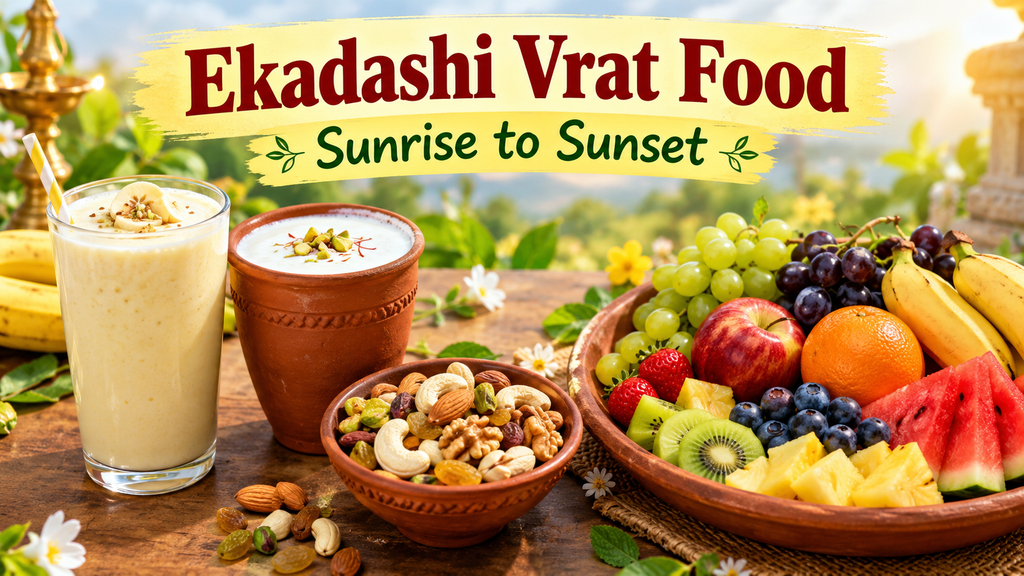
During the core fasting hours between sunrise and sunset, your choices depend entirely on the level of observance you are following:
- For Nirjala Fasting: Complete abstinence from all food items and water. No consumption or touching food and water is permitted during the daylight hours.
- For Milk & Fruit Fasting: If you are observing the standard phalahari fasting process, your daytime intake is strictly limited to:
- Fresh Fruits: Whole fresh fruits such as bananas, apples, papayas, and seasonal varieties.
- Pure Milk & Dairy: Fresh milk and basic pure dairy items to maintain hydration and basic energy levels.
Permitted Ekadashi Vrat Foods to Eat After Sunset
Once the sun sets, or when transitioning into your evening routine as per local calendar traditions, you can move to more substantial, pure sattvic preparations that adhere strictly to zero-grain and zero-onion-zero-garlic standards:
- Allowed Flours & Grains: Sama ke chawal (barnyard millet), Singhara atta (water chestnut flour), Kuttu atta (buckwheat flour), and Rajgira (amaranth) flour.
- Allowed Root Vegetables & Produce: Potatoes, sweet potatoes (shakarkandi), raw banana, pumpkin, and bottle gourd (lauki).
- Pure Fats & Seasonings: Pure cow ghee, cold-pressed peanut oil, and Sendha Namak (rock salt) paired with cumin (jeera) and black pepper.
- Quick Comfort Meal Example: Prepared dishes like satvik sabudana khichdi, made entirely with permitted tapioca sago, potatoes, carrots, peanuts, mild spices, coriander leaves, and rock salt.
The 24-Ekadashi Calendar & Seasonal Food Adjustments
While the core rules of Ekadashi never change—absolute purity, zero grains, and no onions or garlic—how you eat across the 24 annual tithis shifts with the seasons.
Because Ekadashis cycle through the lunar calendar twice a month, your body’s nutritional needs change depending on whether you are fasting during the peak of summer or the depths of winter. Here is how to adapt your pure-vegetarian Ekadashi vrat food menu through the year without breaking tradition:
- The Summer & Monsoon Fasts (e.g., Nirjala, Yogini, Devshayani):
- The Focus: High hydration and cooling elements.
- Menu Shifts: Rely heavily on fresh buttermilk, yogurt, water-rich vegetables like bottle gourd (lauki) and pumpkin, and light Sama ke chawal khichdi. Avoid heavy, heat-producing dry fruits or excessive oil.
- The Winter & Transition Fasts (e.g., Utpanna, Shattila, Mokshada):
- The Focus: Grounding, warming energy and sustained stamina.
- Menu Shifts: Lean into nourishing root vegetables like sweet potatoes (shakarkandi) and arbi (taro root), warming milk-based preparations, and roasted nuts like makhana tossed in pure ghee.
Practical “On-the-Go” & Office-Friendly Vrat Solutions
Trying to maintain a strict, zero-shortcut fast while sitting at an office desk, commuting, or running weekend errands is one of the biggest friction points for modern practitioners. Standard guides assume you have a kitchen at your disposal all day—but real life doesn’t pause for a vrat.
Here is how to stay compliant when you are away from home:
1. Zero-Cook Desk Snacks
When you can’t step away to cook, keep these raw, whole-food options in your bag or desk drawer:
- Dry-Roasted Makhana: Toss fox nuts in a little ghee and sendha namak at home, pack them in an airtight jar, and snack on them when energy dips.
- Raw or Dry-Roasted Nuts: Almonds, walnuts, and cashews are completely satvik and provide steady, sustained fuel.
- Whole Fresh Fruits: Bananas, apples, or papayas require zero prep and are universally accepted on any phalahari fast.
2. Workplace Beverage Rules
Café coffee and office vending machines are minefields for hidden additives. Follow these rules when buying drinks outside:
- Tea & Coffee: Plain black coffee or milk tea is acceptable, but ensure it is made with pure milk and no processed white sugar. Opt for unrefined jaggery or carry your own rock sugar (mishri).
- Watch the Pre-Mixes: Avoid packaged instant coffee or tea premixes, as they may contain hidden anti-caking agents, stabilizers, or starch derivatives.
3. Handling the Busy Schedule
If you are caught running errands or working late, never compromise on ingredient integrity just because you are in a rush. It is better to have a simple glass of cold milk with a banana or a handful of raw nuts than to grab a packaged snack from a local store that risks wheat cross-contamination.
4. Protein Shakes & Probiotics
Maintaining energy during a busy workday requires mindful nourishment since standard pulses and grains are restricted.
- Milk & Banana Protein Shake: Blend fresh milk and ripe bananas together with a touch of rock sugar (mishri) for natural sweetness and sustained energy. Pour it into an insulated travel bottle to sip at your desk. It provides a naturally filling, wholesome protein and carb boost.
- Plain or Lightly Sweetened Lassi: Drink homemade buttermilk or churned yogurt lassi. It provides instant hydration, keeps you cool, and delivers essential dairy nourishment while strictly adhering to phalahari guidelines.
Comprehensive Detailed Ingredient Directory
| Category | Allowed (Purity-First & Satvik) | Strictly Prohibited |
| Flours & Grains | Sama ke chawal (barnyard millet), Singhara atta (water chestnut), Kuttu atta (buckwheat), Rajgira (amaranth) flour. | Rice, wheat, oats, corn, barley, ragi, jowar, bajra, maida, suji (semolina). |
| Vegetables | Potatoes, sweet potatoes (shakarkandi), raw banana, pumpkin, bottle gourd (lauki), arbi (taro root), raw papaya. | Onions, garlic, carrots, radishes, cauliflower, cabbage, tomatoes (in strict traditional fasts), leafy greens like spinach. |
| Spices & Seasonings | Pure Sendha Namak (rock salt), whole or powdered cumin (jeera), black pepper (kali mirch), green cardamom, cinnamon, fresh ginger, lemon juice. | Regular table salt, black salt (kala namak), hing (asafoetida), turmeric (haldi – avoided in strict traditional households), commercial garam masala. |
| Oils & Fats | Pure cow ghee, cold-pressed peanut oil, sesame oil, coconut oil. | Refined seed oils, mustard oil, vanaspati ghee, margarine. |
| Sweeteners & Extras | Organic jaggery (gur), rock sugar (mishri), fresh milk, curd, paneer, malai, unsalted butter, makhana (fox nuts), all raw/dry fruits. | Refined white sugar, artificial sweeteners, packaged syrups, commercial honey (unless verified pure). |
Ekadashi Vrat Food – Frequently Asked Questions (FAQs)
What should I do if I accidentally consume a non-vrat item while at work or on the go?
Do not panic or abandon the day. Acknowledge the slip mentally, offer a quiet internal apology (Kshama Prarthana), and immediately resume your mindfulness and dietary discipline for the rest of the day. Intent and mental purity remain the foundation of any fast.
Are store-eyed packaged "vrat chips" or fried snacks safe to consume?
Exercise extreme caution. Most commercial packaged chips are fried in industrial multi-use oil vats or processed in factories that handle regular wheat and grain flours, leading to cross-contamination. When possible, stick to whole foods like fresh fruit, roasted nuts, or homemade makhana.
3-Tier Quick-Reference Cheat Sheet – Ekadashi Vrat Food
| Category | Tier 1: Universally Safe & Allowed | Tier 2: The “Hidden Trap” Zone (Check Labels) | Tier 3: Strictly Banned |
| Grains & Flours | Sama ke chawal (barnyard millet), Singhara atta, Kuttu atta, Rajgira flour. | Commercial “vrat flours” (risk of wheat cross-contamination on shared factory machines). | Rice, wheat, oats, corn, barley, ragi, bajra, jowar, maida, suji. |
| Proteins & Legumes | Fresh milk, thick/thin curd, paneer, malai, unsalted/pure butter, ghee. | Packaged roasted paneer or dairy with artificial additives/stabilizers. | All lentils (dals), chickpeas, rajma, soy, sprouts, besan (gram flour). |
| Salt & Seasonings | Pure Sendha Namak (rock salt), cumin (jeera), black pepper, fresh ginger, lemon. | Pre-packaged “vrat masalas” or chaat masala (often contain hidden table salt or starch). | Regular table salt, black salt (kala namak), hing (asafoetida), turmeric (in strict traditions). |
| Produce & Snacks | Potatoes, sweet potatoes, raw banana, pumpkin, bottle gourd (lauki), makhana, raw nuts, fresh fruits. | Store-bought packaged potato chips or fried namkeen (often fried in shared commercial oils or mixed with table salt). | Onions, garlic, carrots, radishes, cauliflower, cabbage, tomatoes (in strict traditional fasts). |
Embracing Purity & Devotion During Ekadashi Fasting
Observing an Ekadashi vrat while balancing a modern, busy professional life does not have to be an overwhelming puzzle. By understanding the core guidelines—whether you are observing a strict waterless Nirjala fast or a phalahari routine of fresh milk, fruits, and yogurt between sunrise and sunset—you can stay anchored to authentic traditions without compromising your health or work schedule.
By sticking to pure sattvic choices like sendha namak, fresh dairy, and wholesome homemade meals, you maintain both physical vitality and spiritual focus. Remember that the true essence of an Ekadashi fast lies in mindfulness, restraint, and your devotion to Lord Vishnu. Keep your preparations simple, avoid commercial shortcuts, and let your practice bring peace and purity to your life.
Looking for a quick, comforting meal that follows every single one of these purity rules? Try our zero-onion, zero-garlic Satvik Dahiwale Aloo Recipe—made entirely with potatoes, curd, and pure rock salt, perfect for satisfying your hunger without breaking your vrat.
Enjoyed this post? Join our community of home cooks! Subscribe to our YouTube channel and follow our social media handles for daily Vrat-friendly tips, induction cooking hacks, and authentic Indian flavors delivered straight to your feed.