
Some of the links on this website are affiliate links, which means that I may earn a small commission at no additional cost to you if you click through and make a purchase. I only recommend products or services that I personally use and believe will add value to my readers. All opinions expressed here are my own. Thank you for supporting Easy Good Food!
As winter deepens in West Bengal, nolen gur makes its much-awaited arrival. Its sweet aroma fills homes and sweet shops alike. This marks the celebration of Makar Sankranti (Poush Sankranti) – a festival rooted in warmth and tradition. Among the winter festive treats, Til Laddu holds a special place in every Bengali home. Known as Tiler Naru (তিলের নাড়ু) in the region, it is everyone’s favourite crunchy retreat with incredible aromatic notes. Made with roasted sesame seeds and fragrant nolen gur, this til laddu recipe is simple yet soulful.
Get ready to roll the ultimate sesame magic in your kitchen! 🍯 These til laddus are tiny winter superheroes—warm, nutty, chewy, and packed with the trusted goodness. 🧡💪 Whether you’re craving a quick snack or homemade healthy munchies, try this ancient delicious til laddu recipe.
Made with just sesame seeds, jaggery and a few ingredients, this recipe proves that simple ingredients can create big-time yummies.
😋🌀 It is quick and easy to prepare in less than 30 minutes – only if you know the trick. 🌟 So tie up your hair, grab that kadhai, and let’s start rolling joy—one laddu at a time! 🙌🍘
Til Laddoos – Cultural & Regional Significance in Indian Festivals
More than just a sweet treat, the humble til laddoo (sesame seed and jaggery ball) is a culinary symbol of transition, warmth, and community across the Indian subcontinent. Deeply intertwined with the solar calendar, this traditional sweet marks some of the most significant harvest festivals in India.
Food historians highly value this recipe as an essential festive food because its ingredients hold both spiritual meaning and seasonal relevance. When the winter chill peaks, making and sharing til laddoos becomes a sacred ritual to welcome brighter days ahead.
The Seasonal and Nutritional Logic Behind Festive Til Laddoos
In Indian culture, food is medicine, and festive recipes are traditionally designed to align with the body’s changing needs. The timing of festivals featuring til laddoo is directly tied to the winter solstice—the coldest part of the year.
Ayurvedic Significance: Fighting the Winter Chill
According to Ayurveda, both sesame seeds (til) and jaggery (gur) are ushna (heat-giving) foods. When combined, they provide a dense burst of energy, healthy fats, and essential minerals that warm the body from the within, boost immunity, and keep the skin from drying out during the harsh winter months. Offering this sweet during winter festivals is a wish for the health and physical well-being of your loved ones.
The Symbolic Union of Sesame and Jaggery
Spiritually, the blending of tiny, distinct sesame seeds with sticky, binding jaggery represents unity, harmony, and the melting away of past differences. It serves as a reminder to speak sweet words and maintain strong, unbreakable bonds within the community.
Makar Sankranti: The Epicenter of Til Ke Laddu Celebrations
While eaten throughout the winter, til laddoo takes center stage during Makar Sankranti, a major pan-Indian festival marking the sun’s transition into the zodiac sign of Capricorn (Makara). This festival celebrates the end of winter and the arrival of longer, warmer harvest days.
Maharashtra: The Tradition of ‘Til-Gul Ghya, Goad Goad Bola’
In Maharashtra, Makar Sankranti is incomplete without the exchange of Til-Gul Ladoo. People visit friends and family, handing over these sweets while saying, “Til-gul ghya, aani goad-goad bola”—which translates to, “Accept this til-gul, and speak sweet words.” It is a beautiful festive ritual aimed at resolving old conflicts and starting the harvest year on a harmonious note.
Gujarat and Rajasthan: Fueling the Kite-Flying Energy
In western India, particularly in Gujarat and Rajasthan, the festival is celebrated as Uttarayan. The skies fill with millions of colorful kites, and the terraces fill with loud music. Because kite-flying requires immense stamina and hours in the cold winter air, high-energy Til Ke Laddu and Til Chikki are eaten continuously throughout the day to keep energy levels high.
Regional Variations: How the Festive Sesame Sweet Changes Across India
The beauty of Indian festive cuisine lies in its diversity. While the core ingredients of sesame and jaggery remain intact, different regions adapt the recipe to mirror their distinct harvest cultures.
Lohri and Maghi in Punjab
In North India, Makar Sankranti is preceded by Lohri, a vibrant bonfire festival. Around the roaring fire, communities gather to dance, sing, and offer winter foods to the flames as a gesture of gratitude to Agni (the god of fire). Til Laddoos, along with popcorn and peanuts, are the primary prasad (holy offering) distributed to everyone present to celebrate the harvest of winter crops.
Bhogali Bihu in Assam
In the northeastern state of Assam, the harvest festival is celebrated as Bhogali Bihu. It is a festival completely centered around food and community feasting. Here, sesame seeds are used to make Til Pitha (rolled rice pancakes stuffed with black sesame and jaggery) alongside traditional round Til Laru (the Assamese version of the til laddoo), using local liquid date palm jaggery known as Nolen Gur.
Sakat Chauth in Central and Northern India
Beyond the harvest festivals, til laddoos are absolutely mandatory for Sakat Chauth (also known as Til-Kuta Chauth), a fasting festival dedicated to Lord Ganesha. Mothers fast for the well-being and longevity of their children, breaking the fast only after offering a large, crushed mixture of sesame seeds and jaggery called Til-Kuta, often shaped into large festive laddoos.
How to Make Til Laddu Recipe
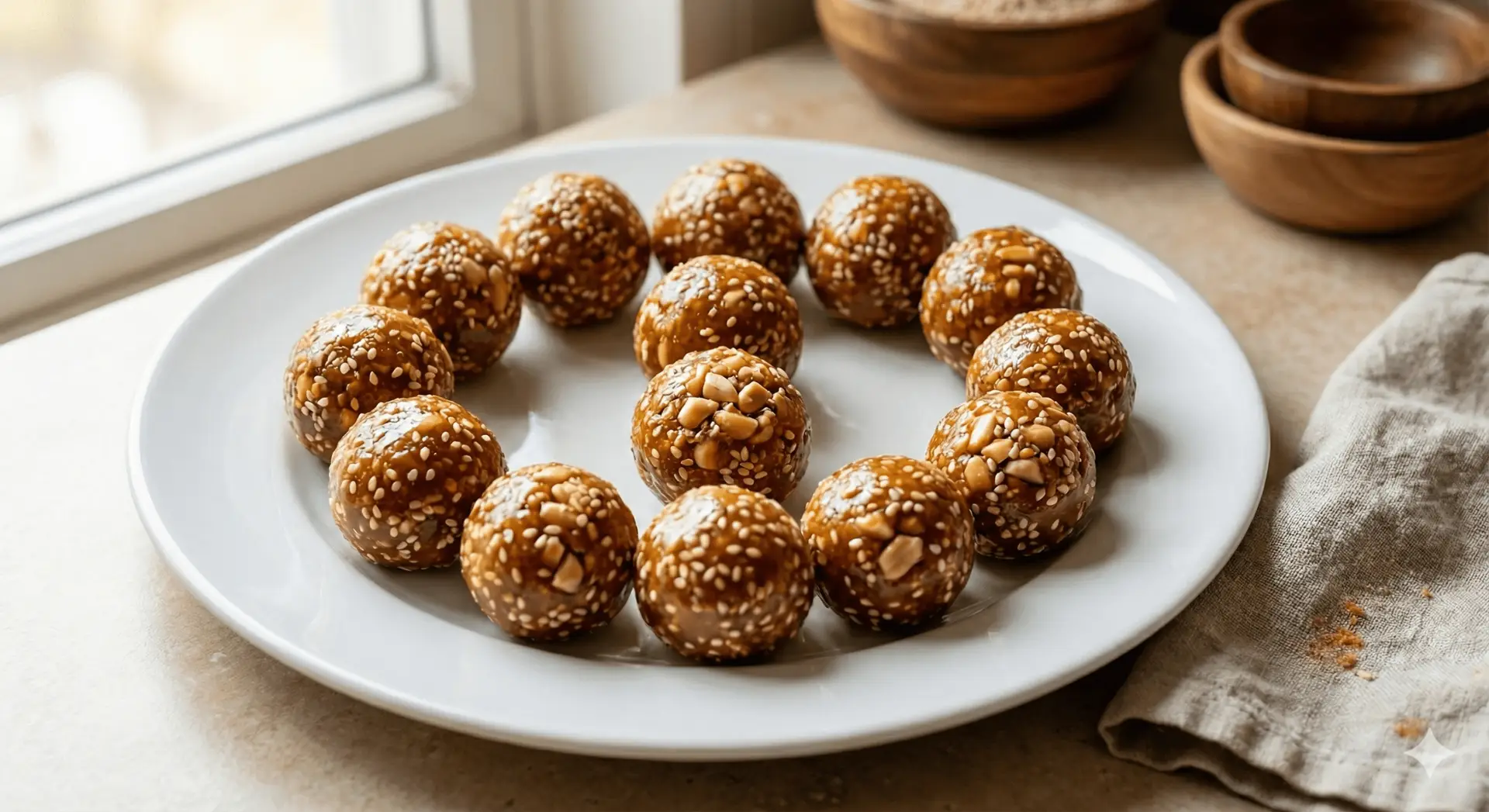
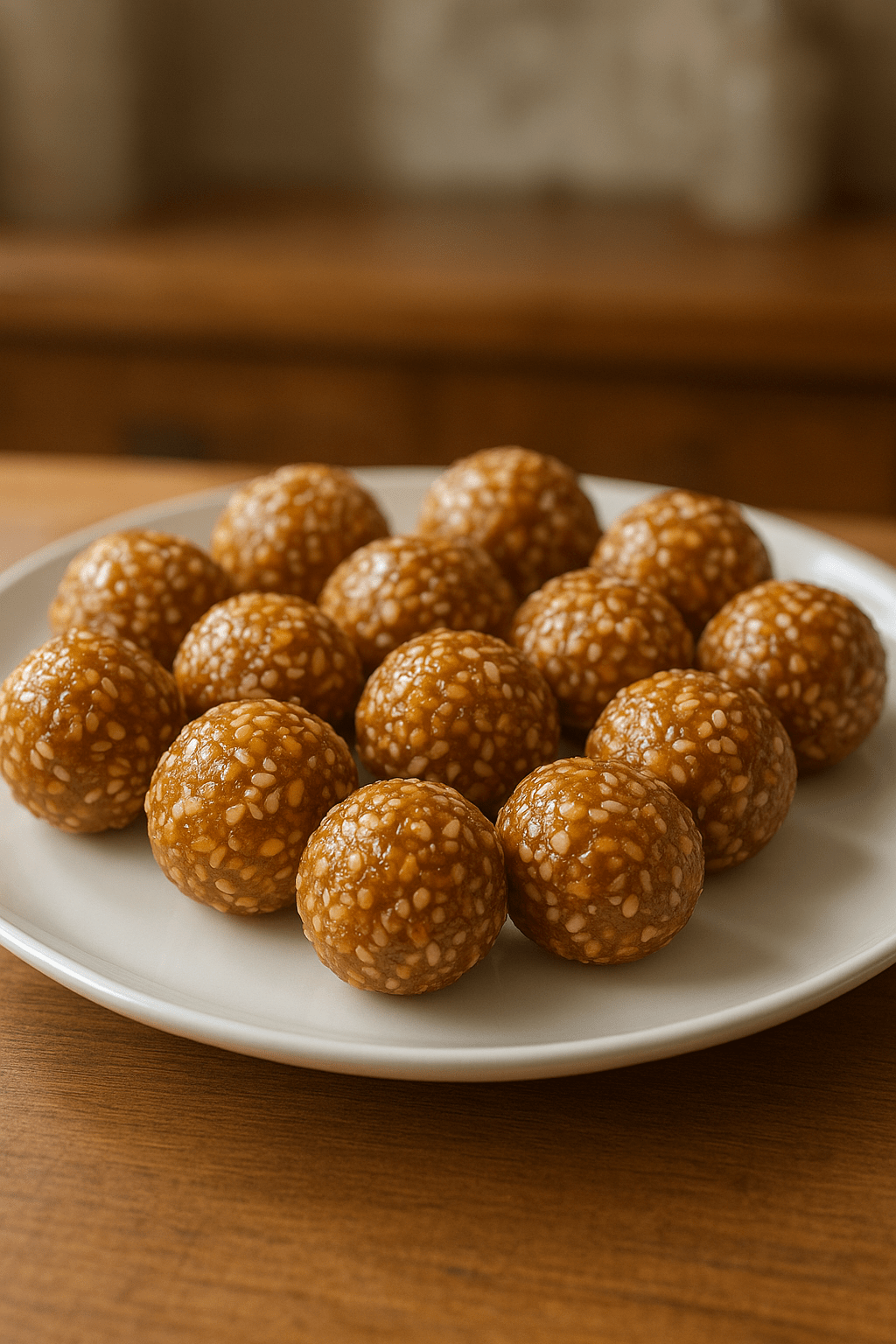

Til Laddu Recipe
Ingredients
Equipment
Method
- Step 1 – Sort and Roast the Til: Ensure your till is clean enough without any minute stone pieces. Roast the til on a medium flame for about 2-3 minutes. Keep stiring the til to avoid burning at the base. Remove the til from heat when the seeds turn slightly golden-white.
- Step 2 – Roast the Peanuts (optional): Sauté the peanuts for 1-2 minutes separately in a dry pan on medium heat. When the peanut skin turns slightly dark, remove the nus from heat.
- Step 2 – Boil the Jaggery: Heat 50ml water with 1 tsp ghee in a thick-base pan. When the water starts boiling, add the jaggery to form a juicy mix. Stir constantly over low flame to avoid sticking at the base or sides. Avoid forming any lumps.
- Step 3 – Test the Jaggery Consistency: When the jaggery thickens, put a few drops of the liquid in a bowl of water (at room temperature). If the jaggery drops solidify in water, it is time to cook the roasted sesame seeds in it.
- Step 4 – Mix Til with Jaggery: Keep the oven at a low flame during this step. The til laddu mixture is extremely sticky and dries very quickly. If it dries completely, the til and gur sticks firmly to the base. This means the things are burnt and they cannot form aromatic laddus.
- Step 5 – Roll the Til Laddus: This is the tricky part of the entire Til ladoo recipe. Grease a plate with ghee all over. Scrape out the sesame-jaggery mixture into the platter or bowl. Now start rolling the laddus in between the palms of your hands.
Notes
Til Laddu – Pro Tips
Choosing the Right Sesame Seeds (Til)
White sesame seeds are traditionally used for making tiler naru in Bengali households. Always select fresh, clean seeds with a mild nutty aroma. Old or stale sesame seeds can taste bitter and ruin the final flavor. Washing and drying the seeds before roasting helps improve taste and texture.
Nolen Gur Is Essential for Authentic Flavor
Nolen gur is the heart of a traditional til laddu recipe. Harvested from date palm sap during winter, it has a rich caramel aroma that regular jaggery cannot replicate. It melts easily and binds the laddus perfectly. Using fresh nolen gur ensures soft texture and deep seasonal flavor.
Roast the Sesame Seeds for Maximum Taste
Sesame seeds should be roasted slowly on low heat. Continuous stirring prevents burning and ensures even roasting. The seeds should turn lightly golden and release a nutty fragrance. Over-roasting can make the laddus bitter and dry.
Grinding or Crushing Sesame Seeds
Lightly crushing or coarsely grinding roasted sesame seeds helps them mix better with melted nolen gur. This step improves binding and gives a softer bite. However, the roasted seeds are chewy delights without grinding. I prefer keeping the whole seeds for the much desired crunch and texture.
Achieving the Perfect Laddu Consistency
The temperature of nolen gur plays a key role in shaping til laddu. It should be warm and pourable, not boiling hot. Mixing at the right temperature ensures smooth binding. Shape the laddus quickly while the mixture is warm, as it firms up once cooled.
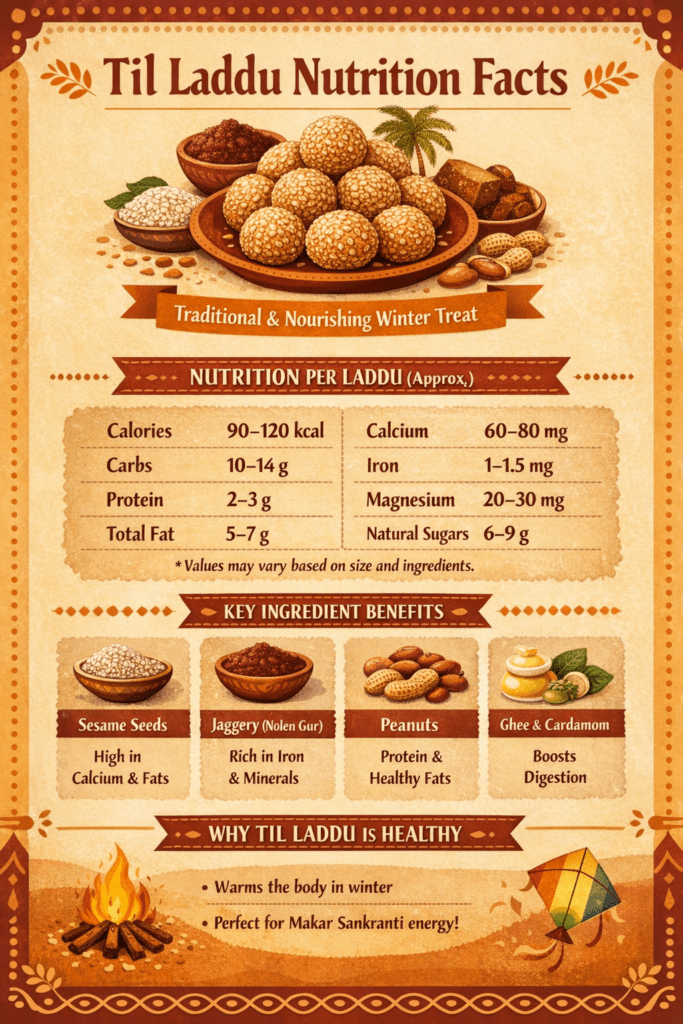
Sesame Laddu – Nutrition Information
Sesame seeds are rich in calcium, iron, and healthy fats. Nolen gur adds natural sweetness along with trace minerals. When consumed in moderation, til laddu is a nourishing winter sweet that balances taste and tradition.
Common Mistakes to Avoid
- Using very hot jaggery can harden the laddus.
- Adding too much sweetener makes them sticky.
- Under-roasted sesame seeds taste raw, while over-roasted ones turn bitter.
- Balanced roasting and correct proportions are essential for perfect tiler naru.
Storage Tips for Til Laddu
Store til laddus in an airtight container at room temperature during winter. They stay fresh for up to ten days. Refrigeration is not recommended, as it hardens the laddus and dulls the aroma of nolen gur.
Til Laddu – FAQs
Is sesame (til) laddu healthy?
Yes, sesame laddu is a nutritious traditional sweet.
It is rich in calcium, iron, fiber, and good fats.
It supports bone health and boosts energy naturally.
What are the benefits of Til Laddu?
Til laddu improves digestion and provides instant energy.
It helps keep the body warm during winter.
It supports bone strength, heart health, and immunity.
How many calories are in one Til Laddu?
One medium til laddu contains around 90–120 calories.
Calories vary based on jaggery, ghee, and laddu size.
Best enjoyed in controlled portions.
Sweet Endings & Sticky Fingers 🍯
And just like that, your kitchen smells like winter magic. This til laddu recipe brings together roasted sesame seeds, nolen gur, and a whole lot of nostalgia. Perfect for Makar Sankranti sharing—or sneaky second helpings. Make a batch, roll with love, and let tiler naru turn ordinary moments into sweet celebrations.
Explore our collection of traditional sweets and dessert recipes. From winter specials to year-round favorites. Each recipe is simple, authentic, and made with love for Indian home kitchen. Visit our recipe categories to discover more fun to make yummy delights. 🍬
Enjoyed this post? Join our community of home cooks! Subscribe to our YouTube channel and follow our social media handles for daily Vrat-friendly tips, induction cooking hacks, and authentic Indian flavors delivered straight to your feed.
This piece feels cultivated with care, like a garden tended over many seasons. Each phrase blossoms in its own time, yet together they create a harmony that is nourishing, serene, and profoundly beautiful.
Thank you so much for the appreciation. It keeps me motivated to work hard for my food blog.