
Some of the links on this website are affiliate links, which means that I may earn a small commission at no additional cost to you if you click through and make a purchase. I only recommend products or services that I personally use and believe will add value to my readers. All opinions expressed here are my own. Thank you for supporting Easy Good Food!
Stuffed parathas are the ultimate comfort food—warm, flaky, and packed with savory spice. But for many home cooks, preparing them comes with a major frustration: the filling leaking and tearing through the dough while rolling.
Whether it’s cauliflower releasing moisture or potatoes making the mixture too soft, wet filling ruins the texture and makes rolling a mess.
In this aloo gobi paratha recipe, we’re revealing a simple game-changing secret ingredient that absorbs excess moisture instantly, ensuring your stuffed parathas roll out smoothly and cook up perfectly golden and crisp every single time. Plus, we’ll share a bonus hack to turn one batch of filling into both a kid-safe version and a spicy adult version!
How to Make Aloo Gobi Paratha Recipe without Tearing

Aloo-Gobi Paratha Recipe
Ingredients
Method
- In a large bowl, combine flour, baking soda, baking powder, salt, sugar, carom seeds, and oil.
- Gradually add water and knead into a smooth, pliable, and soft dough.
- Lightly oil the top of the dough, cover with a damp cloth, and let it rest for 30 minutes.
- Heat a dry skillet or pan over medium-low heat.
- Add ½ cup of besan and roast continuous stirring for 3–4 minutes until it turns slightly golden and releases a nutty aroma.
- Set aside to cool.
- Heat 2 tsp oil in a pan. Add the dry red chilli and cinnamon stick for temper.
- Add the finely shredded cauliflower, salt, and turmeric. Sauté over medium heat until tender and excess moisture cooks off.
- Stir in the boiled mashed potatoes.
- Add your spice powders (red chilli, Kashmiri red chilli, black pepper), chopped coriander, and the dry-roasted besan.
- Mix thoroughly until the filling comes together into a firm, non-sticky mixture. Remove the cinnamon stick and dry red chilli.
- The 1-Batch, 2-Flavor Hack
- Mild / Kid-Friendly: Keep half of the cooked filling as is—fragrant, flavorful, but mild enough for young kids.
- Spicy: To the remaining half of the filling, mix in freshly chopped green chillies and red chilli flakes for an extra kick.
- Divide your rested dough into equal-sized balls. Shape one ball into a cup or small flat disc.
- Roll a portion of your cooled filling into a firm ball (about the same size as the dough ball). Place it in the center.
- Bring the edges of the dough together over the top, pinch tightly to seal, and press down gently.
- Dust lightly with dry flour. Using a light touch, roll out the stuffed dough into a flat circle. Notice how smoothly it rolls without sticking or tearing!
- Heat a tawa or skillet over medium-high heat.
- Place the rolled paratha on the hot tawa. Cook for 1–2 minutes until small bubbles appear, then flip.
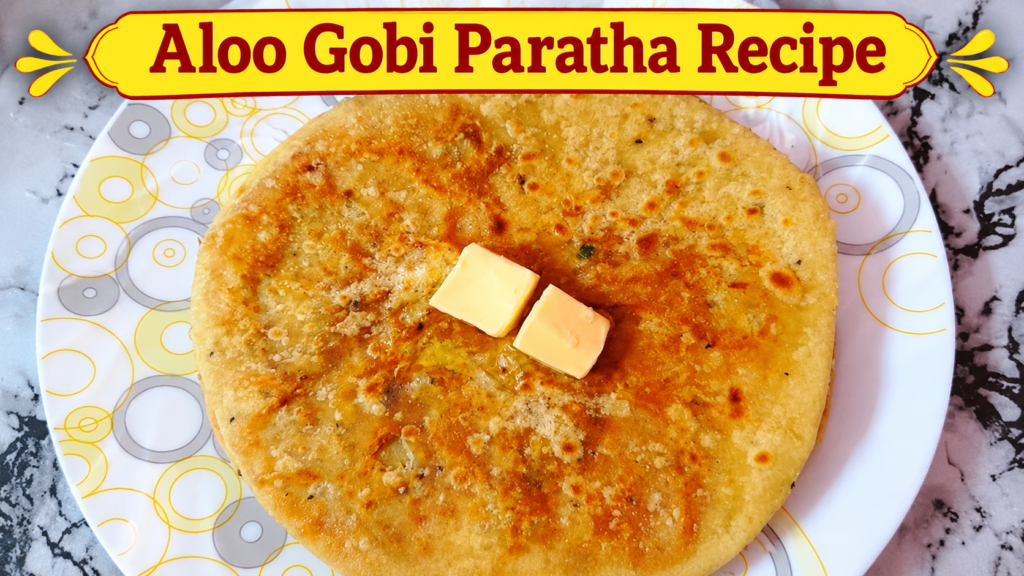
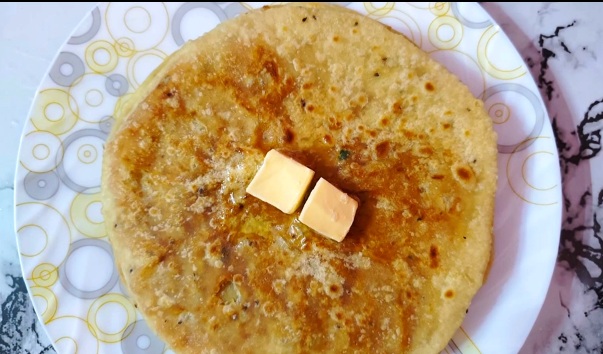
- Spread a spoon of oil or ghee over the surface. Flip again and press gently with a spatula until both sides are golden brown, flaky, and puffed.
Video
Serving Suggestions
Serve your hot Aloo Gobi Parathas straight from the pan with:
- A generous slab of fresh homemade white butter.
- Chilled plain yogurt or tangy tomato raita.
- Spicy mango or lemon pickle.
- A Complete No-Onion, No-Garlic Meal: Pair these crisp stuffed parathas with a rich, comforting curry like my No-Onion, No-Garlic Mushroom Kofta for a hearty pure-vegetarian lunch or dinner.
The Secret Trick: Dry-Roasted Besan (Gram Flour)
The culprit behind torn parathas isn’t your rolling technique—it’s moisture. Vegetables like shredded cauliflower steam and release water when cooked, creating a loose mixture that breaks thin dough.
The Fix: Adding ½ cup of dry-roasted besan (gram flour) directly into your cooked filling.
- Roasted besan acts like a natural sponge, absorbing stray moisture without making the filling dry.
- It binds the mashed potatoes and cauliflower into a cohesive, easily rollable mixture.
- It adds a subtle, delicious nutty flavor that complements traditional Indian spices beautifully.
Pro Tips from My Kitchen for Perfect Aloo Gobi Paratha
Making the perfect and super delicious aloo-gobi paratha is easy. If you are a beginner, following are the essential tips and tricks to get the things done right on your first attempt.
Cooling the Filling is Non-Negotiable
Before you start stuffing your dough balls, let your aloo-gobi mixture cool down completely to room temperature.
- Stops Moisture Release: Warm or hot vegetable fillings trap steam inside the dough pouch. As that steam hits the cooler dough, it releases water droplets, instantly making your dough sticky, limp, and prone to tearing when rolled out.
- Keeps the Parathas Crisp: Fully cooled fillings retain their structure, allowing you to roll out thin, even parathas that puff up beautifully on the tawa and crisp up with minimal oil.
The Secret to a Tender Crust: Baking Powder & Baking Soda
While stuffed parathas are traditionally unleavened, incorporating a tiny pinch of baking powder and baking soda into the maida changes the crust’s texture in two distinct ways:
- Softens the Maida Structure: Without yeast to create large air pockets for a full naan puff, chemical leaveners work internally to break down the natural firmness and chewiness of the flour.
- Creates a Tender Bite: During the mandatory 30-to-60-minute resting period, the leaveners start relaxing the gluten bonds. This prevents the rolled paratha from snapping back, yielding a delicate, velvety-soft crust that stays pliable long after cooking.
2 Ways to Roll Leak-Proof Stuffed Parathas
To keep your aloo-gobi filling from bursting out while rolling, pick the method that matches your comfort level:
- Method 1: The Classic Dough Pocket (Intermediate)Flatten a dough ball into a shallow bowl shape with raised edges and a slightly thicker center. Place the cooled filling in the middle, gather the edges over the top like a dumpling, pinch tightly to seal, and press out any trapped air before rolling gently with light pressure.
- Method 2: The Double-Disc Sandwich (Best for Beginners)Roll out two thin, equal-sized paratha discs. Spread the filling evenly over the first disc, leaving a small border around the edge. Dab a tiny film of water along the clean edge, place the second disc on top, press firmly along the border to lock it in, and roll gently over the top to flatten.
Always Fry the Potato Filling First
While many raw-mash recipes suggest simply mixing boiled potatoes with room-temperature spices, taking a few minutes to pan-fry the mashed potato filling transforms the entire paratha:
- Eliminates That “Boiled Potato” Off-Odor: Plain boiled potatoes often retain a flat, earthy starch smell that can persist even after stirring in dry spices. Pan-frying the mash allows the heat to cook off those sulfurous aroma compounds and trigger a mild Maillard reaction, replacing the flat odor with a warm, nutty, and appetizing aroma.
- Drives Off Internal Moisture: Boiled potatoes hold a surprising amount of trapped water. Frying the mashed mixture over medium heat cooks off excess surface and internal moisture, transforming a watery mash into a dry, cohesive, and moldable filling that won’t leak or turn your maida dough soggy while rolling.
- Blooms the Spices in Fat: Stirring spices like cumin, coriander, and chili into hot oil or warm mash releases their fat-soluble aromatic oils, resulting in a deeper, more evenly distributed flavor profile throughout every bite.
Short on Time on a Busy Weekday?
Stuffed parathas take a little hands-on time at the stove. If you love the classic potato-and-cauliflower pairing but want a completely hands-off, one-pot meal without standing over the pan, try my Bengali-style Aloo Gobi Bati Chorchori—just toss everything together and let it cook on its own.
Enjoy Tear-Free Stuffed Parathas Any Day of the Week
Making stuffed potato-cauliflower flatbreads at home does not have to be a messy balancing act at the rolling board. With a small spoonful of dry-roasted besan absorbing stray vegetable moisture, your filling stays firm, flavorful, and easy to roll from the very first paratha to the last—and dividing the batch lets everyone at the table enjoy their preferred spice level without extra prep.
Give this simple kitchen trick a try the next time cauliflower and potatoes are on your menu, and let me know in the comments how your parathas turned out!
Enjoyed this post? Join our community of home cooks! Subscribe to our YouTube channel and follow our social media handles for daily Vrat-friendly tips, induction cooking hacks, and authentic Indian flavors delivered straight to your feed.